
Updated October 2026. The best website design company is not necessarily the agency with the biggest portfolio, the lowest quote or the most awards. The right choice is the provider whose process, scope, technical approach and support model fit the website you actually need.
Quick answer: choose a website design company by comparing the same criteria across every shortlisted provider: business understanding, live work, written scope, responsive UX, accessibility, content responsibility, SEO foundations, ownership, testing, recurring costs and post-launch support.
This guide explains how to choose a website design company without relying on sales claims. It includes a buyer checklist, questions to ask, proposal-comparison criteria, contract points and red flags to identify before you pay an advance.
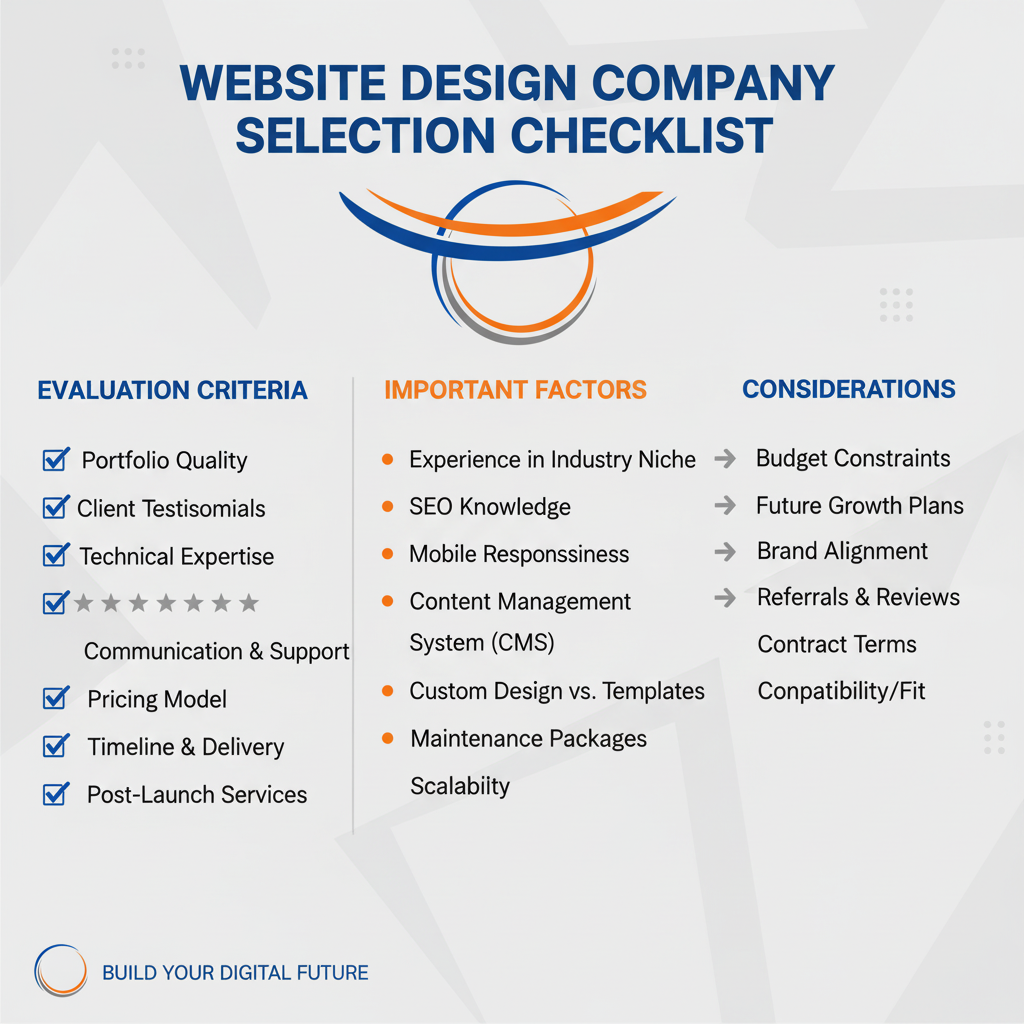
1. Define What You Need Before Comparing Agencies
A useful agency comparison starts before the first sales call. If every provider receives a different description of the project, their proposals cannot be compared fairly.
Write down:
- The main business goal of the website.
- The audiences it needs to serve.
- The primary conversion actions: enquiry, call, booking, purchase, application or something else.
- Required pages or content types.
- Whether content already exists.
- Required forms and integrations.
- Whether ecommerce is involved.
- Whether an existing site, SEO footprint or data must be migrated.
- Who will maintain the site after launch.
- Any fixed launch dependency or deadline.
If you need a structured starting point, use Vylino’s website project brief template before asking agencies to quote.
2. Decide What Kind of Provider You Actually Need
“Website design company” can describe very different providers.
| Provider type | Usually fits | Main question to ask |
|---|---|---|
| Freelancer | Smaller or well-defined projects | Who covers skills outside their speciality? |
| Design studio | Brand, UI/UX and visual-led projects | Who handles development and technical SEO? |
| Web development agency | CMS, ecommerce and integration-heavy projects | How strong is the UX/content process? |
| Full-service web agency | Strategy, design, development and ongoing growth | Which capabilities are genuinely in-house? |
| Specialist ecommerce/app team | Stores, portals and application workflows | Do they have experience with your operational requirements? |
A small brochure site does not always need a large agency. A business-critical ecommerce migration should not be awarded solely because a freelancer’s homepage designs look attractive.
3. Evaluate the Discovery Process Before the Design
Recent 2026 buyer guides consistently treat discovery as a major signal of delivery quality. Strong providers ask about audience, business goals, content, conversion paths and technical constraints before presenting visual solutions.
Useful discovery questions from an agency include:
- Who is the priority customer?
- Which services or products generate the most value?
- What should visitors do after landing?
- What is wrong with the current website?
- Which pages already receive search traffic?
- Who supplies and approves content?
- Which tools must the website integrate with?
- What can the internal team manage after launch?
If the provider discusses colours and templates before understanding the business problem, the process may be design-led rather than outcome-led.
4. Review Live Portfolio Work, Not Only Screenshots
A portfolio screenshot shows appearance. It does not show whether the website works well.
Open live projects and check:
- Mobile navigation.
- Page speed and loading behaviour.
- Forms and calls to action.
- Content hierarchy.
- Readable typography.
- Broken layouts.
- Accessibility basics.
- Whether the site still appears maintained.
One especially useful question is: “Can you show me a site you launched two or three years ago that is still running well?” This reveals more about maintainability than a newly launched homepage. Recent agency-selection guidance makes the same distinction between live long-term work and portfolio presentation.
5. Look for Relevant Experience, Not Just Industry Logos
Industry familiarity can help, but matching the type of problem is more important than matching the logo category.
For example:
- An ecommerce project needs catalogue, checkout and operational experience.
- A multi-location business needs scalable location architecture.
- A B2B company may need strong service-page structure and proof.
- A migration needs redirect and SEO preservation experience.
- A portal needs authentication and application logic.
A beautiful restaurant website does not prove the team can safely migrate a large search-performing B2B site.
6. Compare Written Scope, Not Headline Price
Two proposals can quote the same amount and contain very different work.
| Scope area | What should be written down |
|---|---|
| Strategy | Discovery, audience, goals, information architecture |
| Design | Unique templates, wireframes, UI, responsive states, revision rounds |
| Content | Who writes, edits, supplies, uploads and approves content |
| Development | CMS, forms, integrations, ecommerce, custom functionality |
| SEO foundations | Titles, headings, canonicals, redirects, crawl/index controls, schema responsibilities |
| Performance | Image handling, caching, scripts, Core Web Vitals expectations |
| Accessibility | Target standard or agreed accessibility requirements |
| Testing | Devices, browsers, forms, integrations and acceptance process |
| Launch | Deployment, DNS, redirects, analytics and handover |
| Support | Warranty, maintenance, response expectations and excluded work |
Use Vylino’s website quote comparison checklist when you need to compare proposals line by line.
7. Separate Design, Development and Content Responsibilities
Many project disputes start because “website design” means different things to the buyer and provider.
Ask specifically:
- Are wireframes included?
- Is copywriting included?
- Who sources images?
- Who builds the CMS templates?
- Who enters products or existing content?
- Who handles forms and integrations?
- Who configures analytics?
- Who is responsible for redirects during migration?
For a broader explanation of what a professional engagement may include, see Vylino’s professional web design services buyer guide.
8. Test Responsive Design on Real Devices
Responsive design should be visible in the agency’s finished work, not treated as a feature that exists because the proposal says “mobile-friendly.”
Test:
- Menus.
- Forms.
- Buttons.
- Tables.
- Long service pages.
- Image crops.
- Sticky elements.
- Landscape orientation.
If mobile quality is especially important to your project, Vylino’s responsive web design guide explains the technical and UX checks in more detail.
9. Ask About Accessibility Before Launch
Accessibility should not be an afterthought. W3C’s WCAG framework covers perceivable, operable, understandable and robust web content, with testable criteria at different conformance levels.
Ask how the team handles:
- Colour contrast.
- Keyboard access.
- Visible focus states.
- Form labels and errors.
- Heading structure.
- Alt text workflow.
- Zoom and responsive reflow.
- Interactive components.
The agency does not need to promise a compliance level that is outside scope, but it should be able to explain the accessibility standard it is designing and testing against. See the W3C WCAG overview.
10. Ask How Performance Will Be Measured
A high-quality visual design can still produce a poor website if it loads excessive video, fonts, scripts and oversized images.
Ask:
- What performance checks happen before launch?
- Will representative mobile pages be tested?
- How are images sized and compressed?
- How are fonts loaded?
- Who controls third-party scripts?
- What happens if the finished site performs poorly?
A provider should not promise a universal PageSpeed score without knowing hosting, third-party scripts and functionality. It should be able to describe the performance process and constraints clearly.
11. Treat SEO Guarantees as a Red Flag
A design company can build strong search foundations, but it cannot guarantee a competitive Google ranking.
Google explicitly warns that third-party SEO tools and services cannot guarantee ranking success and do not have access to Google’s internal ranking data. See Google Search Central guidance on third-party SEO services.
A sensible agency should discuss:
- Existing URLs that should be retained.
- Redirect requirements.
- Internal links.
- Titles and headings.
- Canonical controls.
- Indexation.
- Structured data responsibilities.
- Sitemap and robots configuration.
- Search Console/analytics handover.
If the project is a redesign or migration, Google recommends preparing URL mappings and using permanent server-side redirects where URLs change. See Google’s site-move guidance.
Before a redesign, Vylino’s website audit can identify pages, URLs and technical signals that should be protected.
12. Confirm Who Actually Does the Work
Ask whether design, development, copywriting, SEO and QA are handled in-house, by named specialists, by freelancers or by another agency.
Outsourcing is not automatically a problem. Hidden responsibility is.
You should know:
- Your main point of contact.
- Who designs the site.
- Who develops it.
- Who approves technical decisions.
- Who tests it.
- Who supports it after launch.
13. Confirm Ownership Before Paying an Advance
Ownership is one of the most consistent themes across recent 2026 agency-selection guides. Domain, hosting, administrator access, code/design assets and third-party accounts should be understood before work starts.
Clarify control of:
- Domain registration.
- Hosting account.
- CMS administrator credentials.
- Analytics and Search Console.
- Premium plugin/theme licences.
- Design source files where included.
- Custom source code.
- Payment gateway accounts.
- CDN/DNS accounts.
- Stock or licensed assets.
The agreement should also state whether third-party licences can be transferred if the relationship ends.
14. Compare Recurring Costs, Not Only the Build Price
Ask for a list of recurring expenses before signing:
- Hosting.
- Domain renewal.
- Email.
- Premium plugins/apps.
- Theme licences.
- Maintenance.
- Backups/security services.
- CDN or external services.
- Support retainers.
A lower initial quote can become more expensive if essential functionality depends on multiple annual subscriptions.
For budgeting context, use Vylino’s website development cost in India guide.
15. Understand Revisions, Approval and Acceptance
“Unlimited revisions” sounds buyer-friendly but can be a sign that the design process is poorly defined.
A stronger process usually has:
- Defined design stages.
- Named reviewers.
- Revision rounds.
- Approval checkpoints.
- Rules for new requirements.
- A staging review.
- Launch acceptance criteria.
This protects both sides from scope confusion.
16. Ask About Post-Launch Support
Website launch is not the same as ongoing maintenance.
Clarify the difference between:
- Bug fixes.
- Warranty period.
- Content edits.
- CMS/plugin updates.
- Security maintenance.
- Hosting support.
- New features.
- SEO work.
Ask who you contact if something breaks six months after launch and whether support is included, hourly or retainer-based.
17. Evaluate Communication Quality During the Sales Process
The sales process is an early sample of the working relationship.
Look for:
- Clear written answers.
- Reasonable response times.
- Questions that show understanding.
- Willingness to state limitations.
- Ability to explain technical decisions without jargon.
- Written follow-up after important decisions.
If basic scope questions are difficult to answer before payment, they are unlikely to become easier during delivery.
Questions to Ask a Website Design Company Before Hiring
Use these questions with every shortlisted provider:
- What do you understand our website needs to achieve?
- What exactly is included and excluded from the quote?
- How many unique templates/designs are included?
- Who writes and uploads the content?
- Who will actually design and develop the site?
- Can we see relevant live projects?
- How do you handle mobile/responsive design?
- What accessibility checks are included?
- What performance testing is included?
- What SEO foundations are included?
- How do you protect existing URLs during redesign?
- Who owns the domain, hosting, website and accounts?
- Which recurring licences or services will we pay for?
- How many revision rounds are included?
- What happens if requirements change?
- How is the website tested before launch?
- What training or documentation is provided?
- What support is included after launch?
Website Design Company Red Flags
- Guaranteed Google rankings.
- No written scope.
- Portfolio contains only mockups or screenshots.
- Unclear domain or account ownership.
- No explanation of recurring costs.
- Responsive design discussed only as “works on mobile.”
- No staging or approval process.
- No plan for existing URLs during redesign.
- No clear post-launch responsibility.
- Price is dramatically lower but exclusions are unclear.
- The provider cannot explain who performs the work.
- Every client receives the same page structure regardless of goals.
How to Compare 3 Website Design Companies Fairly
| Criterion | Company A | Company B | Company C |
|---|---|---|---|
| Understands business goal | Yes / Partial / No | Yes / Partial / No | Yes / Partial / No |
| Relevant live work | |||
| Written scope | |||
| Content responsibility clear | |||
| Responsive UX process | |||
| Accessibility included | |||
| SEO/migration plan | |||
| Ownership clear | |||
| Recurring costs documented | |||
| Testing/acceptance defined | |||
| Post-launch support defined |
Do not convert this into a single arbitrary “agency score.” Use it to expose differences so you can decide which trade-offs match your project.
Is a Local Website Design Company Better?
Not automatically.
A local agency can be useful when:
- In-person workshops matter.
- Local photography/content production is required.
- The project depends heavily on local-market knowledge.
A remote provider can work equally well when communication, review stages, accountability and timezone coverage are clear.
Choose based on delivery capability, not distance alone.
Should You Choose the Cheapest Website Design Quote?
Price matters, but the cheapest quote is only comparable if the scope is genuinely equivalent.
A lower quote may exclude:
- Copywriting.
- SEO migration.
- Premium licences.
- Product/content uploads.
- Custom integrations.
- Analytics.
- Performance work.
- Post-launch support.
Compare total scope and recurring cost before deciding.
Frequently Asked Questions
How do I choose a good website design company?
Define your requirements first, then compare companies on discovery quality, relevant live work, written scope, responsive UX, accessibility, SEO foundations, ownership, testing, recurring costs and support.
What questions should I ask a web design agency?
Ask who will do the work, what is included, who owns the assets and accounts, how responsive design and accessibility are handled, how existing SEO is protected, what recurring costs apply and what happens after launch.
Should I choose a company with the largest portfolio?
No. Relevant project experience and evidence of maintainable live work are more useful than portfolio volume alone.
Should a website design company provide SEO?
At minimum, the design/build should support sound SEO foundations. Ongoing keyword research, content strategy, link acquisition and continuous optimization may be separate services. The proposal should state exactly what “SEO-friendly” includes.
Who should own my website domain and hosting?
Your business should normally retain clear ownership or administrative control of critical business assets such as the domain, hosting, analytics and CMS administrator account, subject to any agreed managed-service arrangement.
How many website design companies should I compare?
For many business projects, three serious proposals are enough to reveal differences in scope, process and pricing without creating an unmanageable procurement exercise.
How do I compare website design proposals?
Compare the same categories line by line: strategy, design, content, development, integrations, SEO, performance, accessibility, testing, ownership, recurring costs, launch and support.
What should be included in a website design contract?
The agreement should clearly define scope, deliverables, payment terms, timeline, responsibilities, revisions, ownership/licensing, change requests, acceptance, recurring costs, support and termination/handover terms.
Final Buyer Checklist
- We know what the website needs to achieve.
- Every shortlisted provider received the same brief.
- We checked live work on mobile and desktop.
- The written scope is detailed enough to compare.
- Content responsibility is clear.
- Design and development responsibilities are clear.
- Accessibility and performance are addressed.
- Existing SEO/migration requirements are addressed.
- Domain, hosting and account ownership are clear.
- Recurring costs are documented.
- Revisions and change requests are defined.
- Testing and launch acceptance are defined.
- Post-launch support is documented.
If you want to understand Vylino’s commercial scope after using this neutral checklist, review our website design services. If you already have proposals, use the quote comparison checklist before selecting a provider.