
Updated October 2026. A strong link acquisition strategy is not a monthly target for “X backlinks.” It is a repeatable process for deciding which pages deserve links, which websites are worth pursuing, why those publishers would reference you, and how to measure whether the campaign improves search visibility or business outcomes.
That is the practical difference between strategic acquisition and bulk link building. Quality should come before quantity, but “quality” needs to be operational—not a vague instruction to chase high-DA websites. A defensible campaign combines target-page selection, competitor research, linkable assets, prospect qualification, personalized outreach, sensible anchor/context controls and transparent reporting.
This guide focuses on building that system. If you first need to understand what makes an individual backlink valuable, read Vylino’s high-quality backlinks guide.
Link Acquisition Strategy: Quality Before Quantity
Link quantity is simply the number of backlinks or referring domains acquired. Link quality is harder to reduce to one metric because a useful link depends on relevance, editorial context, page quality, audience, placement and the reason the link exists.
| Quantity-first campaign | Strategy-first campaign |
|---|---|
| Starts with a monthly link target | Starts with pages and queries that need authority |
| Builds one generic prospect list | Finds prospects appropriate to each target page or asset |
| Filters mainly by DA/DR | Uses relevance, page quality, audience and editorial fit first |
| Sends nearly identical outreach | Matches the pitch to the publisher and reason to link |
| Reports total links acquired | Reports placements, target pages, referral value and search movement |
| Optimizes for activity | Optimizes for useful outcomes |

Step 1: Decide Which Pages Actually Need Links
One of the most common link-building mistakes is acquiring links to whichever page is easiest to promote. The better starting point is identifying pages where additional external authority could support an already credible search opportunity.
Prioritize pages that meet several of these conditions:
- The page targets a commercially or strategically important query.
- Search intent is already matched well by the content.
- The page is indexed and technically accessible.
- Its on-page content is competitive enough to deserve promotion.
- It already has impressions or ranks within striking distance of stronger positions.
- Competing pages have materially stronger relevant referring-domain profiles.
- The page can naturally earn citations because it contains something useful or distinctive.
Do not use backlinks to compensate for a weak page. If the page has technical, content or intent problems, fix those first. Vylino’s website audit can help identify whether the bottleneck is actually off-page authority.
Step 2: Run a Competitor Backlink Gap Analysis
A backlink gap is not simply “every domain linking to competitors but not to us.” The goal is to identify repeatable patterns: which publishers cite competing businesses, what kinds of pages attract those links, and why those links exist.
Ahrefs recommends competitor link analysis as a way to find websites that commonly link to similar competitors and to identify which competitor pages naturally attract links. See its competitor backlink analysis guide.
A practical competitor-gap workflow
- Select page-level competitors. Use the pages ranking for the same target query, not only companies you consider business competitors.
- Export referring domains and referring pages. Separate links to the competing target page from links that point only to the competitor homepage.
- Find overlap. Sites linking to two or more relevant competitors deserve closer inspection because they may naturally cover your topic.
- Classify the reason for each link. Was it a citation, listicle inclusion, original data reference, partner page, local resource, expert quote, tool, template or news mention?
- Identify content gaps. Review competitors’ most-linked assets to see whether a useful tool, statistic, template or resource is creating the demand for links.
- Build a shortlist—not a giant export. Remove irrelevant domains before outreach begins.
Step 3: Score Prospects Before Outreach
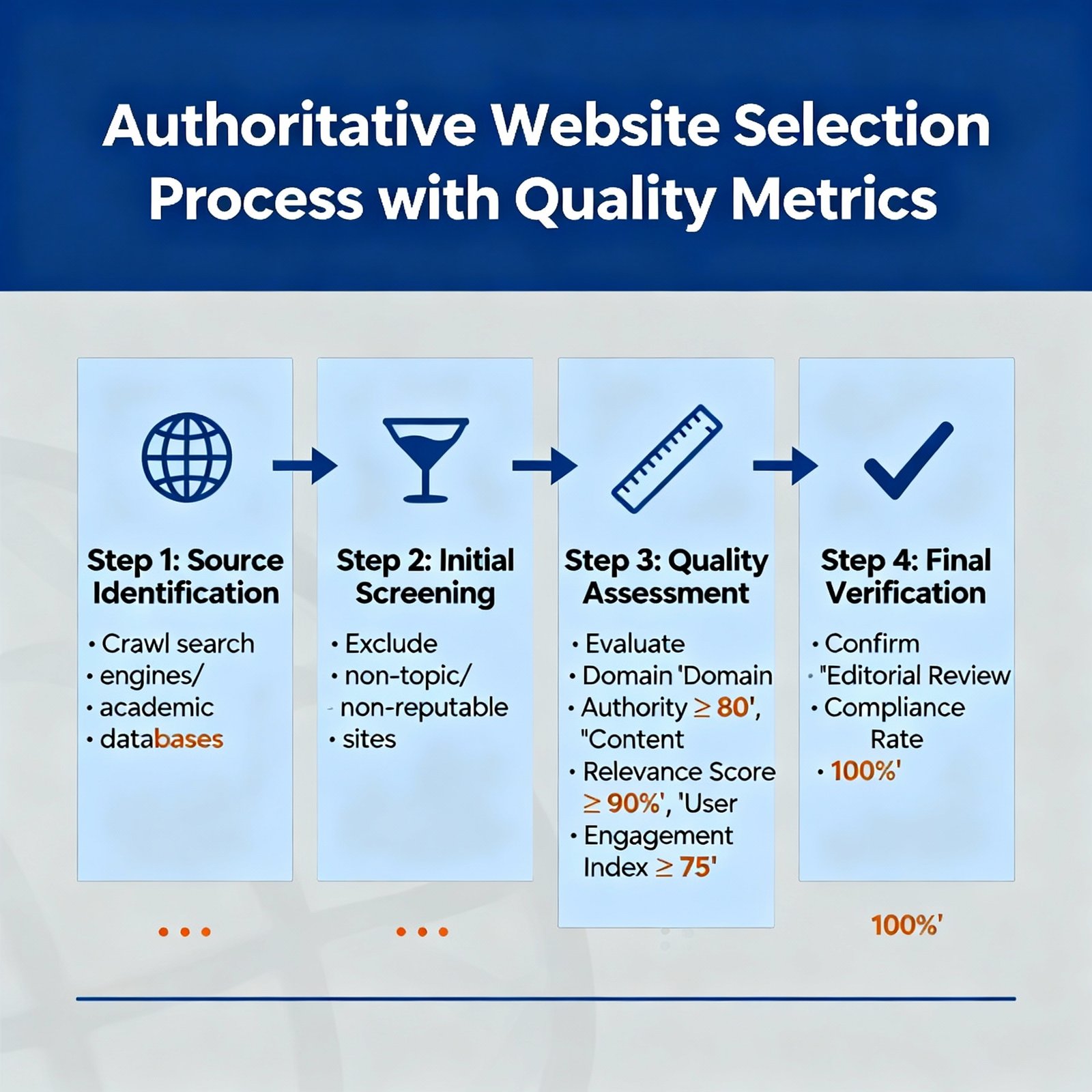
Third-party authority metrics can help sort a long list, but they should not decide the campaign. A simple prospect-scoring model forces you to look at the actual opportunity.
| Factor | 0 points | 1 point | 2 points |
|---|---|---|---|
| Topical relevance | Unrelated | Adjacent topic | Directly relevant |
| Editorial fit | No natural reason to link | Possible with a strong pitch | Obvious citation opportunity |
| Audience fit | Wrong audience | Some overlap | Strong audience overlap |
| Page/site quality | Thin or link-farm signals | Mixed quality | Useful, maintained content |
| Referral potential | Little realistic exposure | Some potential | Could send relevant visitors |
| Business value | Little strategic value | Useful authority signal | Authority + brand/lead value |
This is not a Google scoring system. It is an internal prioritization framework. Adjust the weighting to your market, but keep relevance and editorial fit near the top.
Step 4: Match the Link Method to the Opportunity
Not every prospect should receive the same pitch. The acquisition method should follow the reason the publisher might link.
| Opportunity | Best-fit approach | What you need |
|---|---|---|
| Competitor cited in an industry guide | Resource inclusion / replacement pitch | A clearly better or complementary resource |
| Publisher covers new data | Digital PR / original research | Credible data, methodology and a clear story |
| Brand mentioned without a link | Unlinked mention reclamation | An existing legitimate mention |
| Broken external resource | Broken-link replacement | A close, useful replacement |
| Industry listicle excludes your brand | List inclusion pitch | A genuine reason you belong in the comparison |
| Publication wants expert insight | Expert contribution / quote | Useful first-hand expertise |
| Partners, associations or suppliers | Relationship-based citation | A real business relationship |
The campaign becomes much more effective when the pitch answers: why this publisher, why this page, why this resource, and why now?
Step 5: Build Assets That Give People a Reason to Link
Outreach cannot manufacture genuine demand for an ordinary page. Before scaling prospecting, decide what is actually link-worthy.
Useful asset formats include:
- Original research or survey data.
- Industry statistics with transparent sources.
- Calculators and interactive tools.
- Templates, checklists and downloadable frameworks.
- Detailed comparison studies.
- Local or industry datasets.
- Expert commentary on a timely topic.
- Visual resources or diagrams other publishers can reference.
- Definitive tutorials that solve a difficult problem.
The strongest assets often support both search demand and outreach demand. They rank because they answer a question well and earn links because they give other publishers something worth citing.
Step 6: Build an Outreach System, Not a Blast List
Semrush describes link-building outreach as contacting the right sites with the right message and emphasizes relevant prospecting, useful content and personalized communication. Its link-building outreach guide is a useful reference.
A practical outreach pipeline can use the following stages:
- Prospect identified — relevant site or page found.
- Qualified — passes your relevance and quality review.
- Contact found — editor, author or appropriate decision-maker identified.
- Pitch angle selected — specific reason this person may care.
- Initial outreach sent — concise and personalized.
- Follow-up — one or two reasonable follow-ups where appropriate.
- Response classified — interested, not relevant, paid, declined or no response.
- Placement verified — URL, anchor, destination and link attribute checked.
- Relationship retained — useful contacts are not discarded after one placement.
A campaign database should record the source URL, domain, contact, target page, outreach angle, status, placement URL and notes. This prevents repeated outreach and makes performance measurable.

Step 7: Keep Anchor Text and Placement Natural
A link acquisition plan should not prescribe a rigid percentage of exact-match anchors. Editorial context should determine the wording. Natural profiles can contain branded anchors, URLs, descriptive phrases, article titles and partial keyword references.
Repeated commercial exact-match anchors across many placements can create an obviously manufactured pattern. Google’s spam policies specifically identify optimized anchor text in paid articles, guest posts and distributed press releases as a link-spam example when links are intended to pass ranking credit.
See Google’s current spam policies for the official examples. Paid advertising or sponsored placements are allowed, but qualifying the link appropriately matters.
Step 8: Quality Control Every Placement
Before counting a placement as successful, verify:
- The final URL returns normally and is indexable where appropriate.
- The linking page is still relevant to the original opportunity.
- The destination URL is correct.
- The anchor text is natural in context.
- The link is not hidden in an unrelated footer or widget.
- Any paid or sponsored relationship is qualified correctly.
- The surrounding article is useful and not obviously created only to host links.
- The site has not changed into a broad link-selling operation since prospecting.
A campaign should be willing to reject a placement that fails quality review even after effort has been spent acquiring it.
How Many Links Should You Build Per Month?
There is no universal safe or optimal monthly number. A natural acquisition rate depends on the site, content output, industry, PR activity, existing visibility and the number of legitimate opportunities available.
The better planning question is: how many qualified opportunities can we pursue well?
A small campaign targeting a specialized page may need only a handful of genuinely relevant placements. A large brand publishing original research and running ongoing PR may earn far more. Artificially forcing every client or page into the same monthly quota encourages low-quality prospecting.
How to Split a Link Acquisition Budget
Budget should follow the bottleneck. A campaign may need more investment in content or data before outreach can succeed.
| Campaign weakness | Where to invest first |
|---|---|
| No compelling page to pitch | Content asset / research / tool creation |
| Strong asset but few prospects | Competitor research and prospecting |
| Good prospects but weak response | Pitch angle, personalization and contact quality |
| Placements acquired but target page does not improve | Recheck intent, on-page quality, internal links and technical SEO |
| High link count but little business impact | Reassess target-page selection and prospect relevance |
For broader search work around content, technical SEO and authority together, review Vylino’s SEO services.
What Metrics Should a Link Acquisition Campaign Track?
A useful report should show more than the number of backlinks completed.
Acquisition metrics
- Qualified prospects identified.
- Outreach messages sent.
- Positive response rate.
- Placements secured.
- Relevant referring domains gained.
- Lost or removed placements.
Quality metrics
- Topical relevance of linking pages.
- Editorial/contextual placement quality.
- Target-page and anchor distribution.
- Referral traffic or brand exposure where measurable.
SEO and business metrics
- Search impressions and ranking movement for promoted pages.
- Organic clicks and qualified landing-page traffic.
- Leads, assisted conversions or revenue influenced by promoted pages.
- Growth in branded mentions and authoritative citations.
Do not attribute every ranking change to link acquisition. Search performance can also change because of content updates, technical changes, competitors, search-system changes and seasonality.
Link Acquisition Red Flags
Be cautious when a provider or internal process relies on any of the following:
- Guaranteed rankings from a fixed number of links.
- A fixed DA/DR threshold as the only quality requirement.
- Thousands of prospects with almost no manual qualification.
- Identical outreach sent to unrelated publishers.
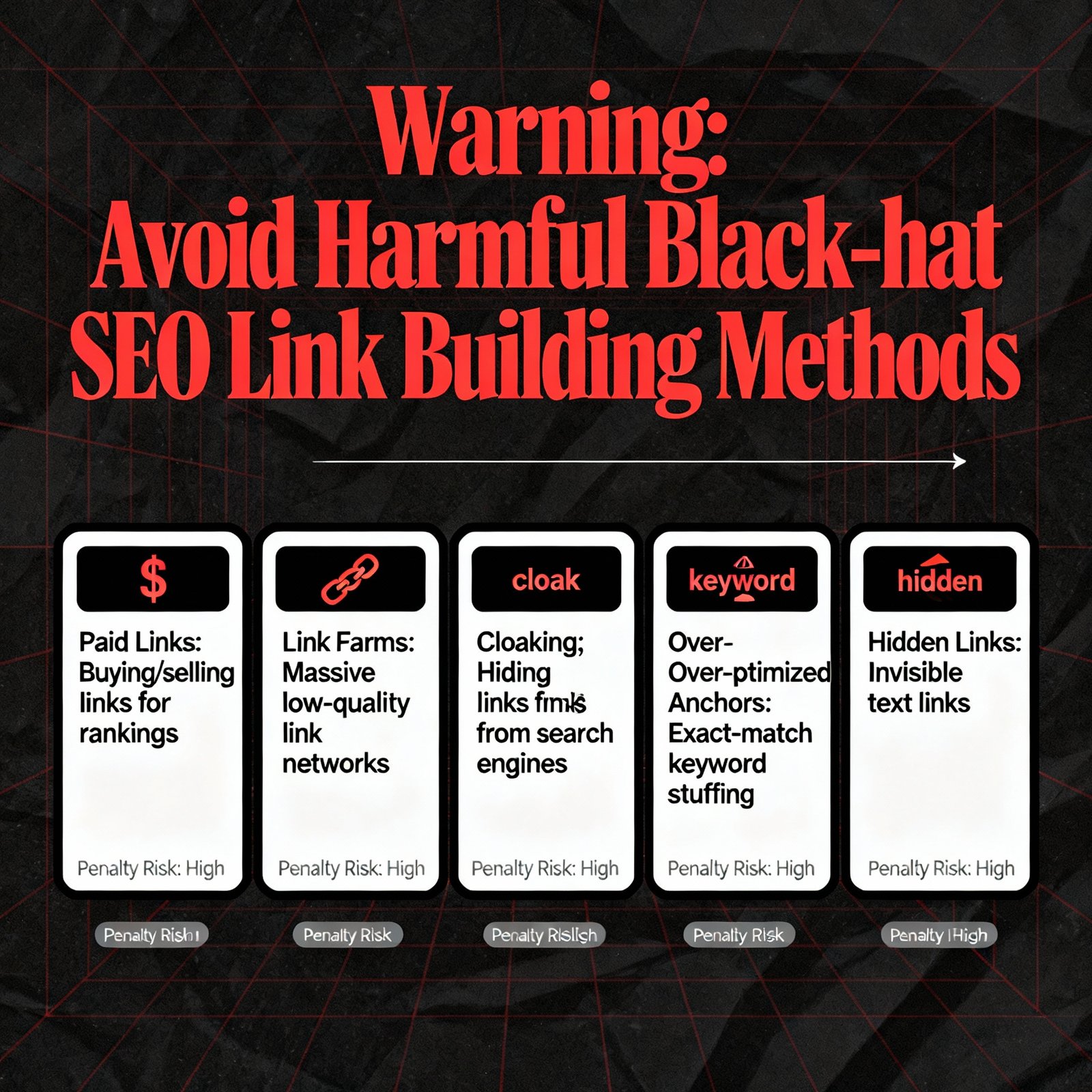
- Guaranteed “dofollow” placements on sites that openly sell links at scale.
- Private networks with concealed ownership.
- Sitewide footer, widget or template links used for ranking manipulation.
- No record of which page each link is intended to support.
- Reporting that celebrates link count but ignores search and business outcomes.
Google defines link spam as creating links to or from a site primarily to manipulate search rankings and lists paid ranking links, excessive exchanges, automated link creation and low-quality directory links among its examples.
Where Vylino’s Backlink Service Fits
This article is the strategy layer: how to choose pages, identify opportunities, qualify prospects, structure outreach and evaluate results. For businesses that want the execution handled, Vylino’s backlink building services cover prospect research, outreach, contextual placement work and reporting.
The separation is intentional: a service page should explain what a client can buy, while this guide should help readers understand how a responsible campaign is designed.
Frequently Asked Questions
What is a link acquisition strategy?
A link acquisition strategy is a planned process for deciding which pages need external authority, finding relevant publishers, choosing an appropriate reason for those publishers to link, conducting outreach or PR, quality-checking placements and measuring the results.
Is backlink quality more important than quantity?
Quality and quantity are not mutually exclusive, but quantity without relevance and editorial value is a weak goal. Build as many legitimate, relevant links as the market and your assets can naturally support rather than chasing volume for its own sake.
How do I find backlink prospects?
Start with the referring domains of pages ranking for your target queries, identify websites linking to multiple competitors, review the most-linked competitor assets, search for resource pages and relevant publications, and monitor unlinked brand mentions. Ahrefs’ competitor analysis guidance specifically recommends looking for common links and patterns across competitor profiles.
Should I use DA or DR to choose link prospects?
Use third-party authority metrics as filters, not as final decisions. Manually review topical relevance, actual content quality, editorial practices, page context, audience and whether the link would make sense without an SEO motive.
How many outreach emails should I send?
There is no ideal universal number. The goal is enough qualified outreach to test and scale a working campaign. More emails do not help if the prospects are irrelevant or the pitch has no credible reason for the recipient to link.
Does personalized outreach still matter?
Yes. Both Ahrefs and Semrush emphasize prospect relevance and appropriate outreach rather than random mass requests. A useful pitch demonstrates why the recipient’s audience benefits from the proposed resource.
Final Takeaway
A durable link acquisition strategy starts before the first outreach email. Choose the right target pages, understand why competitors earn links, create something worth citing, qualify prospects manually, match each opportunity to the right acquisition method and measure outcomes beyond backlink count.
Quality over quantity is not a request to build fewer links. It is a request to build only the links that have a credible reason to exist—and to scale that process when you find a repeatable source of relevant editorial opportunities.