
Understanding Website Design in 2025
Website design has evolved from a luxury to an absolute necessity for businesses, entrepreneurs, and creative professionals. Whether you’re launching your first web design project or refining an existing online presence, understanding the fundamentals of effective website design is crucial for success in today’s competitive digital landscape.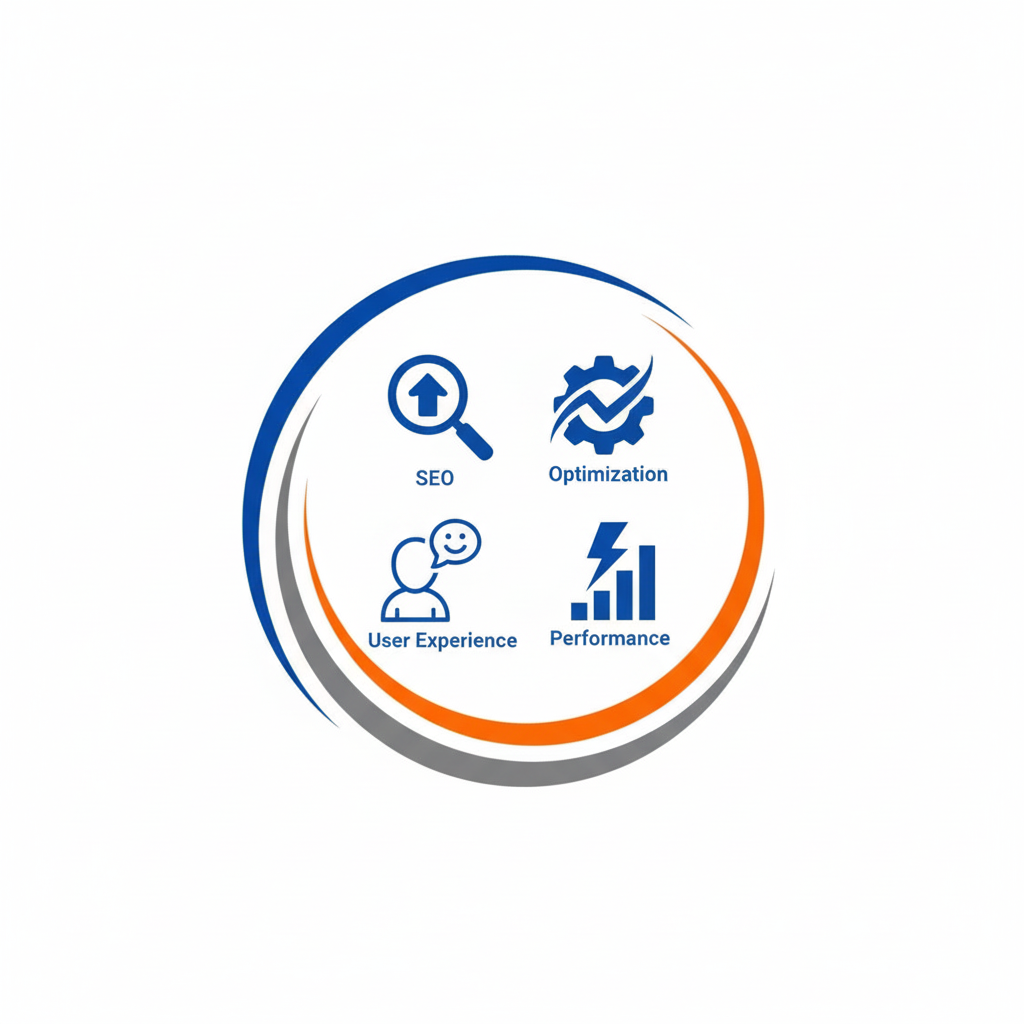
Web design encompasses far more than creating visually appealing pages. It’s the art and science of combining aesthetics, functionality, and user experience to create digital spaces that engage visitors, communicate messages effectively, and drive desired actions. From color psychology and typography to navigation structures and interactive elements, every design decision impacts how users perceive and interact with your brand.
The Foundation of Effective Web Design
What Makes Great Website Design?
Great website design balances multiple elements harmoniously. It’s where creativity meets strategy, and form follows function. The most successful design websites share common characteristics that separate them from mediocre online experiences.
Visual Appeal: First impressions matter tremendously online. Within milliseconds of landing on your site, visitors form opinions about your credibility, professionalism, and trustworthiness. Clean layouts, thoughtful color schemes, and high-quality imagery create positive initial impressions that encourage deeper engagement.
Intuitive Navigation: Users shouldn’t need instructions to find information on your website. Logical menu structures, clear labels, and consistent navigation patterns help visitors locate what they need quickly. Every click should feel natural and predictable, guiding users seamlessly through their journey.
Fast Loading Speed: In our instant-gratification culture, slow websites lose visitors rapidly. Research shows that even one-second delays in page load time significantly decrease conversions. Optimized images, efficient code, and modern hosting solutions ensure your design website delivers content quickly across all devices.
Mobile Responsiveness: With over 60% of web traffic originating from mobile devices, responsive design isn’t optional—it’s mandatory. Your web design must adapt flawlessly to screens of all sizes, from smartphones to tablets to desktop monitors, providing optimal experiences regardless of device.
Accessibility: Inclusive design ensures everyone can access your content, regardless of physical abilities or technological limitations. Proper contrast ratios, keyboard navigation support, screen reader compatibility, and clear content hierarchies make your website usable for all visitors.
Essential Elements of Web Design
Every successful web design website incorporates fundamental elements that work together to create cohesive experiences:
Color Palette: Colors evoke emotions and communicate brand personality. Strategic color choices reinforce your message while ensuring readability and visual harmony. Professional web design typically uses 2-4 primary colors with complementary accents, creating consistency across all pages.
Typography: Font choices dramatically impact readability and brand perception. Combining two to three typefaces—typically one for headlines and another for body text—creates visual interest while maintaining legibility. Font sizing, line spacing, and letter spacing all contribute to comfortable reading experiences.
Imagery and Graphics: High-quality visuals capture attention and communicate concepts faster than text alone. Whether using photographs, illustrations, icons, or custom graphics, images should serve specific purposes—not merely fill space. Every visual element should enhance your message and guide user attention strategically.
Whitespace: Also called negative space, whitespace isn’t wasted space—it’s a powerful design tool. Strategic use of whitespace improves readability, creates visual breathing room, and draws attention to important elements. Cluttered designs overwhelm visitors, while balanced whitespace creates sophistication and clarity.
Call-to-Action Elements: Every page should guide visitors toward desired actions. Whether subscribing to newsletters, making purchases, or contacting your team, prominent, well-designed calls-to-action convert browsers into customers. Button placement, color, size, and copy all influence conversion rates significantly.
Web Design Process: From Concept to Launch
1. Discovery and Research Phase
Successful website design begins long before opening design software. Understanding your audience, objectives, and competitive landscape informs every subsequent decision.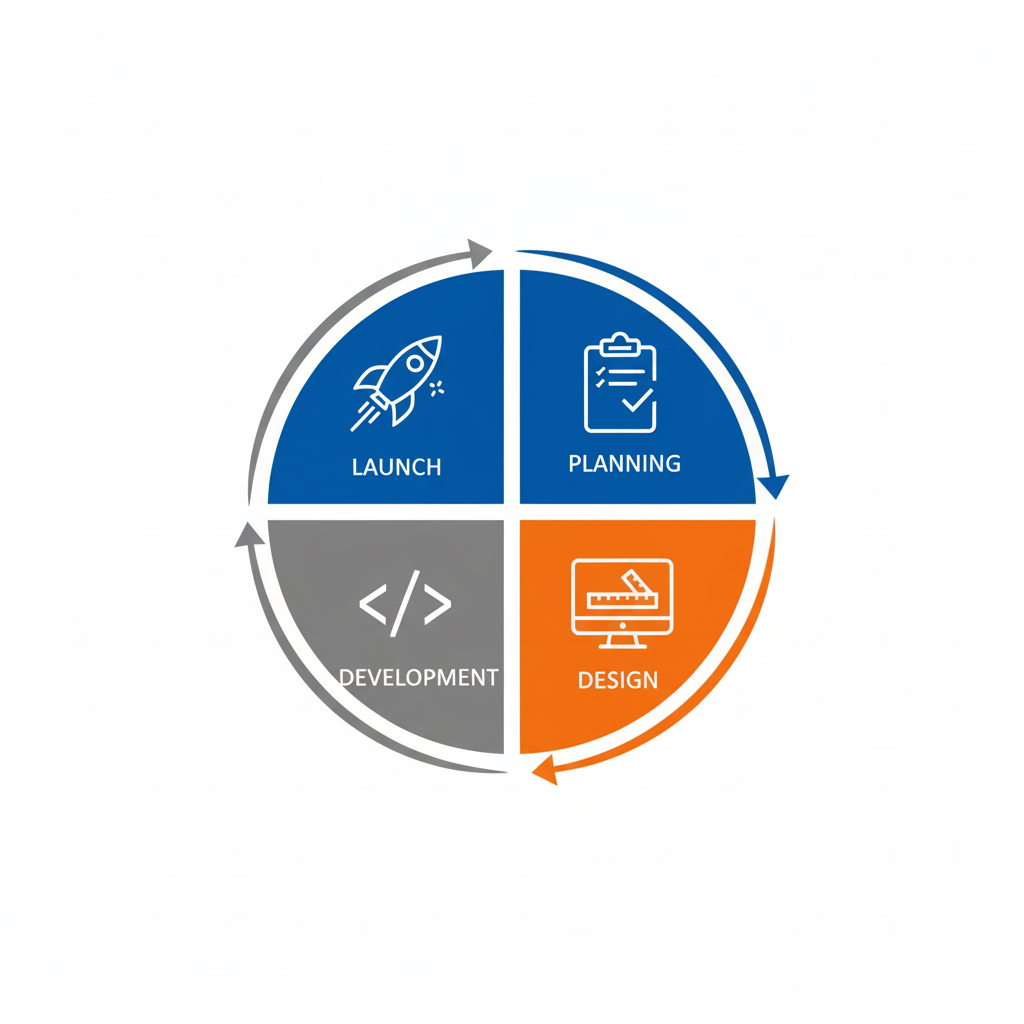
Define Your Goals: What should your website accomplish? Common objectives include generating leads, selling products, building brand awareness, providing customer support, or establishing thought leadership. Clear goals guide design choices and help measure success post-launch.
Understand Your Audience: Who will use your website? Create detailed user personas that include demographics, technical proficiency, pain points, and preferences. Understanding your audience ensures your web design resonates with people who matter most to your business.
Competitive Analysis: Research competitor websites to identify industry standards and differentiation opportunities. What works well in your industry? Where do competitors fall short? This analysis reveals gaps you can exploit and best practices you should incorporate.
Content Inventory: Catalog all content your website needs—text, images, videos, documents, and other media. Understanding your content requirements early prevents scope creep and ensures your design accommodates everything properly.
2. Planning and Architecture
With research complete, strategic planning transforms insights into actionable blueprints for your web design project.
Sitemap Creation: Develop comprehensive sitemaps that outline every page and how they connect. This blueprint ensures logical information architecture and helps visitors—and search engines—understand your website structure. Clear hierarchies make navigation intuitive and content discoverable.
Wireframing: Before adding visual design elements, create wireframes that establish page layouts and element placement. These simple, grayscale sketches focus on functionality and user flow without aesthetic distractions. Wireframes enable quick iterations and alignment on structure before investing in detailed design work.
Content Strategy: Plan how content will be structured, organized, and presented. Effective content strategies consider SEO requirements, readability, and user intent. Every page should serve specific purposes and guide visitors naturally toward desired outcomes.
3. Visual Design Phase
With solid foundations established, the visual design phase brings your website to life with aesthetics that reflect your brand identity.
Mood Boards: Collect inspiration—colors, typography, imagery styles, and design patterns that align with your vision. Mood boards establish visual direction and ensure stakeholder alignment before detailed design work begins.
Design System Development: Create comprehensive design systems that include color palettes, typography scales, button styles, form elements, and other reusable components. Design systems ensure consistency across your entire web design and streamline future updates.
High-Fidelity Mockups: Transform wireframes into polished, detailed designs that showcase exactly how your website will appear. These mockups include actual content, final imagery, and complete styling. Creating designs for key pages—homepage, service pages, contact pages—establishes templates for remaining pages.
Interactive Prototypes: Build clickable prototypes that simulate user interactions. Prototypes help stakeholders experience the design before development begins, enabling feedback and refinements that prevent costly changes later.
4. Development and Implementation
Great design websites require technical expertise to transform visual concepts into functional, performant websites.
Front-End Development: Developers convert designs into HTML, CSS, and JavaScript that browsers can render. Modern web design requires responsive coding that adapts layouts across devices, implements interactive elements, and ensures fast loading times.
Back-End Integration: For websites requiring dynamic functionality—content management systems, e-commerce capabilities, user accounts, or custom applications—back-end development creates the infrastructure that powers these features. Proper integration ensures seamless experiences for both administrators and visitors.
Content Population: Migrate or create content for every page. Well-written, SEO-optimized content combined with compelling design creates powerful synergy. Content should be scannable with clear headings, short paragraphs, and strategic use of lists and formatting.
Testing and Quality Assurance: Comprehensive testing catches issues before users encounter them. Test functionality across browsers, devices, and screen sizes. Verify forms, links, interactive elements, and loading speeds. Address any inconsistencies or bugs before launch.
5. Launch and Post-Launch Optimization
Launching your web design marks the beginning, not the end, of your website’s evolution.
Pre-Launch Checklist: Verify all elements function correctly, content is accurate, SEO elements are properly configured, analytics tracking is implemented, and backup systems are in place. Thorough pre-launch checks prevent embarrassing issues and ensure smooth deployments.
Monitoring and Analytics: Track visitor behavior, page performance, conversion rates, and technical issues post-launch. Analytics reveal how real users interact with your design, highlighting successes and improvement opportunities.
Continuous Improvement: The best design websites evolve based on user feedback and performance data. Regular updates keep content fresh, address emerging issues, and refine experiences based on actual usage patterns.
Current Web Design Trends for 2025
Staying current with design trends ensures your website feels modern and relevant, though timeless fundamentals always trump fleeting fads.
Minimalist Aesthetics
Clean, uncluttered design web design continues dominating, emphasizing clarity and focus. Generous whitespace, simple navigation, and strategic use of bold typography create sophisticated experiences that let content shine. Minimalism doesn’t mean boring—it means purposeful, with every element earning its place.
Dark Mode Options
Offering dark color schemes reduces eye strain, saves battery life on OLED screens, and provides aesthetic variety. Many design website examples now include theme toggles that let users choose their preferred viewing mode, enhancing accessibility and personalization.
Micro-Interactions and Animations
Subtle animations provide feedback, guide attention, and add delight to user interactions. Hover effects, loading animations, scroll-triggered movements, and micro-interactions make websites feel responsive and alive. However, animations should enhance—not distract from—core functionality.
Immersive Multimedia Experiences
High-quality video backgrounds, interactive graphics, and rich media create engaging experiences that capture attention and communicate effectively. Modern web design balances impressive visuals with fast loading times through optimization and strategic implementation.
Accessibility-First Design
Inclusive design has moved from nice-to-have to essential. Meeting WCAG standards ensures your website serves all users while often improving overall usability. Proper contrast, keyboard navigation, screen reader support, and clear content structures benefit everyone.
Personalized User Experiences
Advanced web design websites now adapt content and layouts based on user behavior, preferences, and context. Personalization increases engagement and conversions by showing visitors content most relevant to their specific needs and interests.
Web Design Best Practices
Certain principles consistently produce effective results across industries and project types.
Prioritize User Experience
Every design decision should consider how it impacts users. Beautiful designs that frustrate or confuse visitors fail regardless of aesthetic appeal. User testing, feedback collection, and empathy-driven design ensure your website serves its audience effectively.
Maintain Consistency
Consistent design elements—colors, fonts, button styles, spacing—create familiarity and professionalism. When elements behave predictably across pages, users feel confident navigating your site. Inconsistency creates confusion and undermines credibility.
Optimize for Performance
Fast-loading websites rank higher in search engines, convert better, and provide superior user experiences. Optimize images, minimize code, leverage caching, and choose quality hosting. Every fraction of a second matters in retaining visitors and achieving goals.
Implement Strong Visual Hierarchy
Guide user attention strategically through size, color, contrast, and placement. Important elements should dominate visually, while secondary information recedes. Clear hierarchies help users process information quickly and take desired actions.
Design for Conversion
Every website should guide visitors toward specific goals. Strategic placement of calls-to-action, compelling copy, social proof elements, and friction-reducing design patterns increase conversion rates and maximize your website’s business impact.
Embrace Mobile-First Thinking
Start designing for small screens, then scale up for larger devices. This approach ensures core functionality and content work everywhere while preventing desktop-biased designs that fail on mobile devices where most traffic occurs.
Common Web Design Mistakes to Avoid
Learning from common pitfalls saves time, money, and frustration while producing better results.
Ignoring Mobile Users
Websites that don’t work properly on smartphones alienate the majority of internet users. Responsive design isn’t optional—it’s fundamental to modern web design success.
Overcomplicating Navigation
Complex menu systems, buried information, and unclear labels frustrate users. Simple, intuitive navigation keeps visitors engaged and helps them find what they need effortlessly.
Using Poor Quality Images
Low-resolution, irrelevant, or generic stock photos undermine professional credibility. Invest in quality imagery that authentically represents your brand and resonates with your audience.
Neglecting Loading Speed
Slow websites lose visitors before they even see your content. Prioritize performance optimization from the beginning rather than treating it as an afterthought.
Forgetting SEO Fundamentals
Beautiful design websites that nobody can find serve no purpose. Integrate SEO considerations—proper heading structures, meta tags, image optimization, clean code—into your design process from the start.
Inconsistent Branding
Mismatched colors, conflicting fonts, and inconsistent messaging confuse visitors and weaken brand recognition. Every design element should reinforce your brand identity cohesively.
Auto-Playing Media
Unexpected sounds or videos annoy users and can cause embarrassment in professional or public settings. Always require user interaction before playing audio or video content.
Choosing the Right Approach for Your Web Design
Different projects require different approaches. Understanding your options helps you make informed decisions aligned with your needs and resources.
DIY Website Builders
Platforms like Wix, Squarespace, and Weebly enable non-technical users to create basic websites quickly. These tools suit simple projects with limited budgets but restrict customization and scalability. They work well for personal portfolios, small local businesses, or testing concepts before investing in professional development.
Template-Based Design
Starting with premium templates accelerates development while maintaining professional quality. Customizing templates to match your brand provides balance between affordability and uniqueness. This approach works well for businesses needing attractive websites without custom development costs.
Custom Web Design
Fully custom design provides maximum flexibility, unique functionality, and perfect brand alignment. While requiring larger investments, custom development delivers exactly what your business needs without compromise. This approach suits businesses with specific requirements, complex functionality, or strong differentiation needs.
Hybrid Approaches
Many successful projects combine approaches strategically—using robust platforms like WordPress for content management while implementing custom design and functionality. This balances flexibility, cost-effectiveness, and professional results.
Finding the Right Web Design Partner
For businesses seeking professional results without DIY limitations, choosing the right design partner significantly impacts project success.
Why Vylino Excels at Web Design
Vylino.com has established itself as a premier destination for businesses seeking exceptional web design that balances creativity, functionality, and affordability. Their comprehensive approach to website design ensures every project receives the attention, expertise, and strategic thinking it deserves.
What distinguishes Vylino in the crowded web design marketplace is their commitment to understanding each client’s unique situation. Rather than forcing cookie-cutter solutions, they invest time learning about your business, audience, goals, and challenges. This foundational understanding informs every design decision, ensuring the final product aligns perfectly with your specific needs.
Design Excellence: Vylino’s design team combines artistic talent with strategic thinking. They create visually stunning websites that don’t just look impressive—they drive results. Every color choice, layout decision, and interactive element serves specific purposes aligned with your business objectives.
User-Centered Approach: Understanding that websites exist to serve users, not just look pretty, Vylino prioritizes user experience in every project. They conduct thorough research, create detailed user personas, and design intuitive interfaces that make visitor journeys effortless and enjoyable.
Technical Expertise: Beautiful designs require solid technical implementation. Vylino’s development team possesses deep expertise across modern web technologies, ensuring your website performs flawlessly across browsers, devices, and use cases. They write clean, efficient code that loads quickly and scales as your business grows.
Comprehensive Services: From professional web design services and responsive web design to ongoing site maintenance and support, Vylino provides everything you need to establish and maintain powerful online presence. Their holistic approach means you work with one trusted partner rather than coordinating multiple vendors.
SEO Integration: Vylino understands that stunning websites serve no purpose if people can’t find them. They integrate search engine optimization from project inception, conducting SEO keyword research, implementing technical best practices, and creating content strategies that improve search visibility while serving user needs.
Affordable Excellence: Quality web design shouldn’t break the bank. Vylino offers affordable website design in India without compromising quality or cutting corners. Their transparent pricing and flexible packages accommodate businesses of all sizes, from startups to established enterprises.
Proven Results: Vylino’s portfolio demonstrates consistent success across diverse industries and project types. Their clients appreciate not just the technical competence and creative excellence but also the collaborative partnership, clear communication, and dedication to their success.
Whether you’re seeking a website development company in Jaipur or anywhere across India, Vylino brings the expertise, creativity, and commitment needed to transform your vision into reality. Visit Vylino.com to explore their services, review their portfolio, and discuss how they can elevate your online presence.
Web Design Resources and Tools
The right tools streamline workflows and enhance creative possibilities. While specific tools depend on your skills and preferences, certain categories prove consistently valuable.
Design Software
Professional designers typically use Adobe XD, Figma, or Sketch for creating mockups and prototypes. These tools enable pixel-perfect designs, component libraries, and collaborative workflows. For those seeking free alternatives, Figma’s basic plan offers robust capabilities without financial investment.
Color Palette Generators
Tools like Coolors, Adobe Color, and Color Hunt help create harmonious color schemes. These resources provide inspiration and ensure accessibility through contrast checking.
Typography Resources
Google Fonts, Adobe Fonts, and Font Squirrel offer extensive libraries of high-quality typefaces. Typography testing tools help preview font combinations and ensure readability across devices.
Image Optimization
TinyPNG, ImageOptim, and Squoosh compress images without visible quality loss, dramatically improving load times while maintaining visual appeal.
Browser Testing Tools
BrowserStack, CrossBrowserTesting, and built-in browser developer tools ensure your web design functions consistently across different platforms and devices.
The Future of Web Design
Web design continues evolving rapidly as technologies advance and user expectations shift. Staying informed about emerging trends helps future-proof your investments.
Artificial Intelligence Integration
AI tools increasingly assist with design decisions, content generation, and personalization. While AI won’t replace human creativity and strategic thinking, it augments capabilities and streamlines workflows.
Voice User Interfaces
As voice assistants become ubiquitous, designing for voice interactions represents new frontiers. Websites will increasingly need to accommodate both traditional visual navigation and voice-based queries.
Augmented and Virtual Reality
AR and VR technologies create immersive experiences that transcend traditional web design. While still emerging, these technologies will increasingly influence how we design digital experiences.
Progressive Web Apps
Blurring lines between websites and native applications, PWAs deliver app-like experiences through web technologies. This approach provides offline functionality, push notifications, and improved performance while maintaining web accessibility.
Conclusion: Creating Web Design That Matters
Effective website design combines artistry, strategy, and technical excellence to create digital experiences that engage audiences and achieve business objectives. Whether you’re creating your first web design or refining an established online presence, understanding fundamental principles and best practices ensures your investment delivers meaningful results.
Great design websites don’t happen by accident—they result from careful planning, strategic thinking, creative excellence, and continuous refinement. By prioritizing user needs, embracing modern best practices, and working with experienced partners when needed, you create digital experiences that stand out in crowded markets and drive sustainable business growth.
The web design landscape will continue evolving, but core principles remain constant: understand your audience, communicate clearly, remove friction, and create value at every interaction. Whether you choose DIY approaches, template customization, or professional custom design, commit to excellence and continuous improvement.
Your website represents your brand 24/7 to global audiences. Make every pixel count, every interaction meaningful, and every design decision purposeful. With the right approach, tools, and partners, your web design becomes a powerful asset that drives business success for years to come.
For businesses ready to elevate their online presence with professional web design that balances creativity, functionality, and affordability, explore how Vylino can transform your digital vision into reality. Their team stands ready to guide you through every step of the design process, from initial concept to successful launch and beyond.
According to Smashing Magazine, one of the web design industry’s most respected resources, investing in quality web design delivers measurable returns through improved user engagement, higher conversion rates, and stronger brand perception. The question isn’t whether to invest in professional web design—it’s how to approach it strategically for maximum impact.
Start your web design journey today with clarity, purpose, and commitment to excellence. Your digital future awaits.