
How to Choose the Best Website Design Company: Complete Selection Guide 2025
Selecting a website design company is one of the most important decisions you’ll make for your business. Your website represents your brand to the world, generates leads, and often is your primary sales channel. Yet many business owners approach this decision carelessly, choosing based solely on price or because someone recommended a friend.
The wrong choice leads to websites that don’t convert, don’t rank in search engines, require constant fixes, and ultimately drain your budget and time. The right choice delivers a website that becomes your most valuable business asset, consistently generating leads and revenue.
This comprehensive guide walks you through everything you need to know about selecting a website design company that will deliver exceptional results for your specific business needs.
Why Choosing the Right Website Design Company Matters
Your website isn’t a one-time expense like purchasing office furniture. It’s an ongoing marketing and sales tool that directly impacts your business success. A well-designed website attracts qualified leads, establishes credibility, and converts visitors into customers.
Conversely, a poorly designed website costs you money. Visitors leave immediately, your competitors gain their business, and you’re stuck with a site you’re unhappy with—often locked into contracts making escape difficult and expensive.
The difference between mediocre and exceptional web design isn’t just aesthetics. Professional website design includes:
Strategy – Understanding your business goals, target audience, and competitive landscape before building anything.
User Experience (UX) – Designing intuitive interfaces that guide visitors toward conversion.
Search Engine Optimization (SEO) – Building websites that rank in search results and drive organic traffic.
Conversion Optimization – Implementing psychological principles and best practices that convert visitors into leads or customers.
Performance – Creating fast, reliable websites that work perfectly across all devices.
Scalability – Building websites that grow with your business.
Support – Providing ongoing maintenance and improvements.
Cheap website design companies skip most of these elements. They build websites quickly and cheaply, then move on to the next client. Professional website design companies invest time understanding your business and building websites that deliver results.
Understanding Website Design Company Types
Website design companies aren’t all the same. Understanding different types helps you identify which is right for your needs.
Freelance Designers
Freelancers work independently, typically operating from home or small offices. They’re often affordable and can be highly skilled, but quality varies dramatically.
Freelancer Strengths:
-
Lower costs (typically $2,000-10,000 per project)
-
Often highly specialized skills
-
Direct communication with the designer
-
Flexible project scope adjustments
Freelancer Weaknesses:
-
Inconsistent quality (no quality control process)
-
Limited continuity if they leave the industry
-
Fewer accountability mechanisms
-
Single point of failure if the freelancer is unavailable
-
May lack project management expertise
-
Limited understanding of business strategy
Small Design Agencies (1-10 Employees)
Small agencies have teams but maintain personal, local service. They’re common in cities and regions.
Small Agency Strengths:
-
Better quality control than freelancers
-
Team approach brings multiple perspectives
-
Some project management infrastructure
-
Better continuity if someone leaves
-
Reasonable pricing ($5,000-20,000+)
-
Often understanding of local market
Small Agency Weaknesses:
-
Smaller portfolio and less specialized expertise
-
Limited resources for large projects
-
May lack advanced marketing knowledge
-
Sometimes higher prices than freelancers without corresponding value
-
Limited technology infrastructure
Mid-Size Agencies (10-50 Employees)
Mid-size agencies have specialized teams: designers, developers, project managers, strategists, and account managers.
Mid-Size Agency Strengths:
-
Professional project management
-
Specialized expertise across disciplines
-
Robust quality assurance processes
-
Strong portfolio and case studies
-
Comprehensive service offerings
-
Professional accountability
-
Established infrastructure
Mid-Size Agency Weaknesses:
-
Higher costs ($15,000-50,000+)
-
May feel less personal than working with freelancers
-
Bureaucratic processes sometimes slow down projects
-
Account manager as intermediary (not direct designer access)
Large Design Agencies (50+ Employees)
Large agencies tackle enterprise projects with extensive teams and capabilities.
Large Agency Strengths:
-
Sophisticated strategies
-
Top-tier talent and expertise
-
Comprehensive brand and digital services
-
Strong project management
-
Proven track records with major brands
-
Advanced technology and tools
Large Agency Weaknesses:
-
Very high costs ($50,000-200,000+)
-
May feel impersonal with multiple intermediaries
-
Slower decision-making processes
-
Overkill for small business needs
Specialized Boutique Agencies
Boutique agencies focus on specific industries, platforms, or services (e-commerce, WordPress, SaaS, nonprofits, etc.).
Boutique Agency Strengths:
-
Deep expertise in their specialization
-
Understanding specific industry needs
-
Often competitive pricing for their niche
-
Portfolio of relevant work
Boutique Agency Weaknesses:
-
May not be suitable if your needs fall outside their specialization
-
Smaller size means limited resources
-
Less diverse service offerings
Key Qualities of Excellent Website Design Companies
Excellent website design companies share consistent characteristics, regardless of size.
1. Strategic Thinking Beyond Aesthetics
Excellent designers ask questions before starting work. They want to understand your business, goals, target audience, and competitive landscape. They don’t jump immediately to design; they develop strategy first.
Red flag: Designers who want to start designing before understanding your business thoroughly are prioritizing the design process over your business goals.
2. Strong Portfolio and Case Studies
Portfolio quality directly correlates with company quality. Excellent designers showcase more than pretty pictures; they provide case studies explaining the strategy, challenges, solutions, and results.
Evaluate portfolio work by asking:
-
Do designs look modern and professional?
-
Is there variety showing they’ve worked across industries?
-
Do case studies explain their thinking and approach?
-
Can you see measurable results for clients?
-
Is the work aligned with current design trends?
3. SEO Knowledge and Implementation
Many website design companies build beautiful sites that don’t rank. Excellent designers understand SEO isn’t just on-page optimization; it’s built into site architecture, speed, mobile responsiveness, and content structure from the beginning.
Ask about their approach to:
-
Site structure and information architecture
-
Technical SEO implementation
-
Mobile responsiveness
-
Page speed optimization
-
Content strategy and keyword targeting
4. Conversion Optimization Focus
Professional designers don’t just make sites look good; they make them convert. They understand conversion psychology and implement best practices that turn visitors into leads or customers.
Excellent designers consider:
-
Clear value proposition communication
-
Call-to-action placement and design
-
Form design and optimization
-
User journey mapping
-
Trust signals and credibility elements
5. Communication and Project Management
Website projects often involve multiple stakeholders, decisions, and revisions. Excellent companies have systems ensuring clear communication, timely updates, and organized project management.
Indicators of excellent communication:
-
Established project management systems
-
Regular status updates
-
Clear processes for feedback and revisions
-
Responsive to questions and concerns
-
Professional account manager or point of contact
6. Ongoing Support and Maintenance
Good websites aren’t set-and-forget. They require updates, security patches, monitoring, and continuous optimization. Excellent companies offer support packages and understand that post-launch, your relationship is just beginning.
Ask about:
-
Support options and pricing
-
Website maintenance services
-
Performance monitoring
-
Security updates
-
Content update services
7. Technology and Tools Expertise
Excellent designers stay current with technology, tools, and best practices. They understand various platforms—WordPress, Webflow, custom development—and recommend the right solution for your needs, not just what they’re most comfortable with.
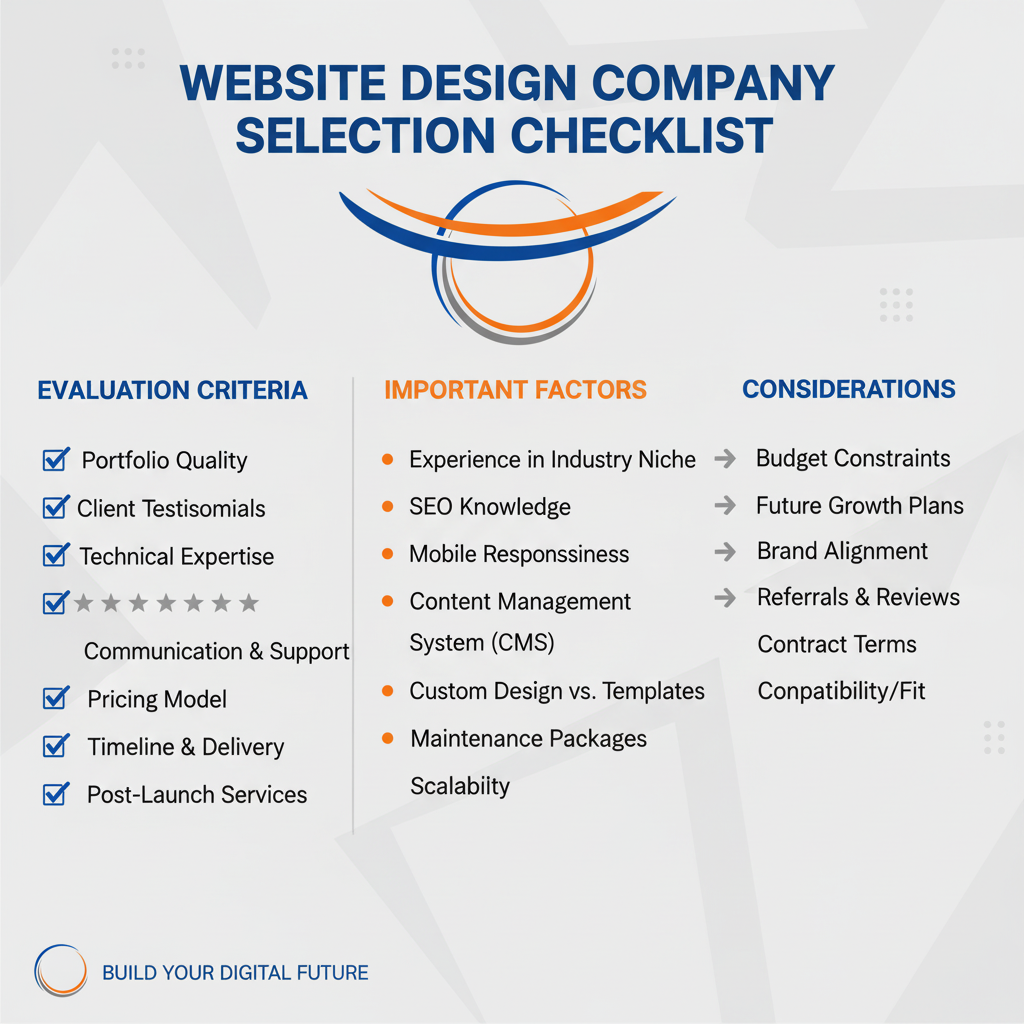
Website Design Company Selection Checklist
Use this checklist when evaluating and comparing website design companies:
Business Understanding
-
☐ Asks questions about your business, goals, and audience
-
☐ Understands your industry and competitive landscape
-
☐ Discusses measurable goals and success metrics
-
☐ Develops strategy before jumping to design
Portfolio and Credibility
-
☐ Portfolio showcases high-quality, modern work
-
☐ Case studies show results and measurable impact
-
☐ Has experience with businesses similar to yours
-
☐ Provides references you can contact
-
☐ Verifiable testimonials and reviews
Design Quality
-
☐ Designs look professional and current
-
☐ Designs are aligned with your brand identity
-
☐ Designs consider user experience and usability
-
☐ Shows understanding of your target audience
-
☐ Mobile-responsive design
Technical Capabilities
-
☐ Understands SEO and implements best practices
-
☐ Can explain their technical approach
-
☐ Experienced with your chosen platform (WordPress, custom, etc.)
-
☐ Focuses on performance and speed optimization
-
☐ Implements security best practices
Conversion Focus
-
☐ Considers user psychology in design
-
☐ Designs clear calls-to-action
-
☐ Discusses conversion optimization strategies
-
☐ Can explain design decisions based on conversion principles
Communication and Management
-
☐ Clear communication style
-
☐ Established project management processes
-
☐ Regular status updates and transparency
-
☐ Responsive to questions and concerns
-
☐ Professional and reliable
Pricing and Value
-
☐ Transparent pricing structure
-
☐ Clear deliverables defined upfront
-
☐ Reasonable timeline and milestones
-
☐ Pricing aligned with service quality
-
☐ Clear revision policies
Support and Maintenance
-
☐ Offers ongoing support options
-
☐ Provides website maintenance services
-
☐ Available for questions post-launch
-
☐ Proactive about updates and optimization
Essential Questions to Ask Website Design Companies
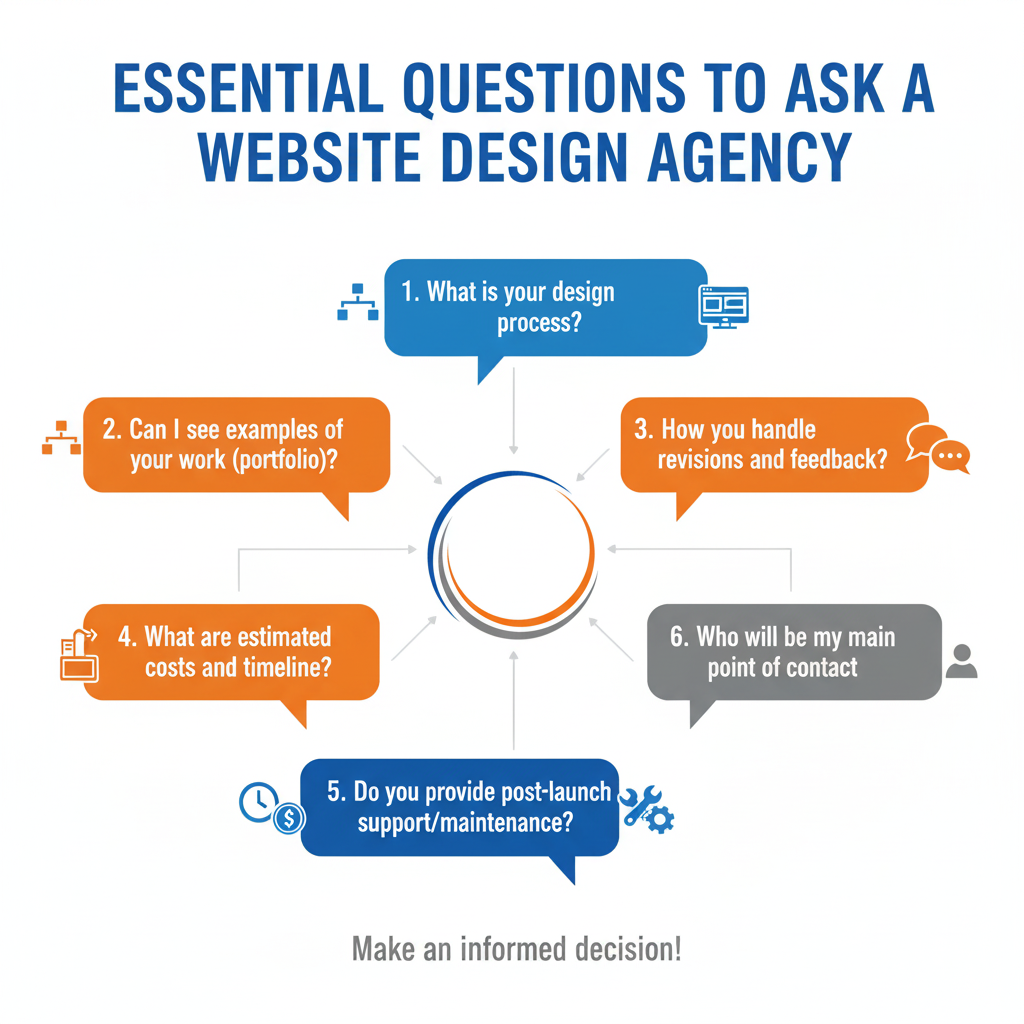
Before hiring any web design company, ask these critical questions:
About Their Process
-
“Walk me through your web design process from start to finish.” – Listen for evidence of strategy, discovery, planning, design, development, testing, and launch phases. Avoid companies that skip early planning phases.
-
“What is your discovery process?” – How deeply do they investigate your business, goals, audience, and competitors before designing?
-
“How do you handle revisions?” – Understand their revision policy upfront. How many revision rounds are included? What’s the cost of additional revisions?
-
“What’s your timeline?” – Get a realistic project timeline with clear milestones.
About Their Experience
-
“Have you worked with businesses like mine?” – Ask about experience in your industry. Industry-specific knowledge is valuable.
-
“Can you provide references from similar businesses?” – Request client references you can actually contact to discuss their experience.
-
“What platforms do you work with?” – Understand which technologies they specialize in and why they recommend certain platforms.
About SEO and Performance
-
“How do you approach SEO?” – Ask specifically about their SEO implementation strategy. Red flag: Companies that say “we’ll do SEO later” or treat it as an add-on.
-
“How do you optimize for mobile devices?” – Mobile optimization is non-negotiable. Understand their approach.
-
“How do you ensure website speed and performance?” – Ask about optimization techniques and tools they use to monitor performance.
About Conversions and Goals
-
“How do you approach conversion optimization?” – Do they understand conversion psychology and best practices?
-
“How do you measure success?” – Ask how they’ll track results and measure whether the website meets goals.
-
“What analytics do you implement?” – Understanding of analytics and conversion tracking is crucial.
About Support and Maintenance
-
“What happens after launch?” – Ask about post-launch support, maintenance plans, and ongoing optimization.
-
“What’s your security approach?” – Ask about SSL certificates, backups, security updates, and protection against hacking.
About Pricing
-
“Why is your pricing at this level?” – Ask them to explain their pricing. Value for money is important.
-
“What’s included in your pricing?” – Get clarity on exactly what’s included and what costs extra.
-
“Are there hidden fees?” – Understand all potential costs upfront.
Red Flags: Warning Signs to Avoid
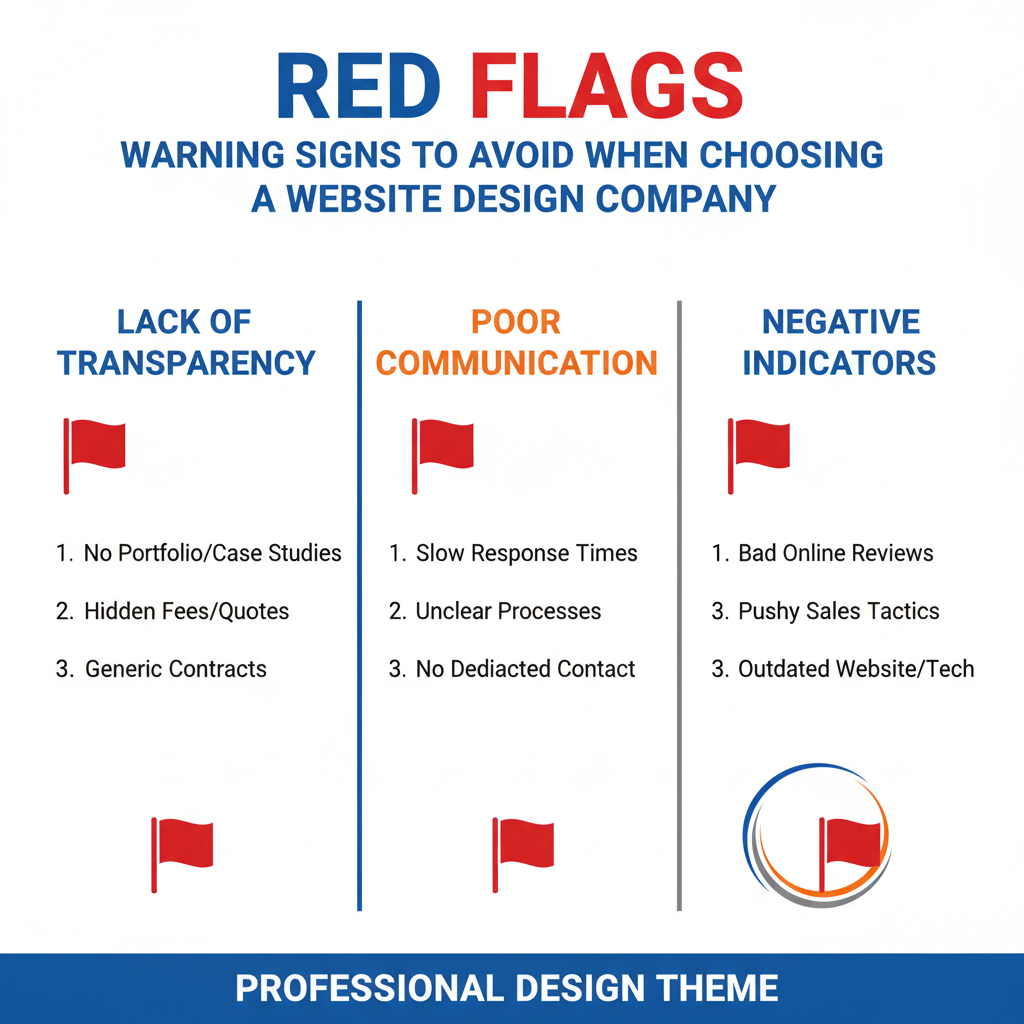
Certain warning signs indicate you should look elsewhere for a website design partner:
Red Flag #1: No Discovery or Strategy Phase
Companies that immediately want to start designing without understanding your business are prioritizing their process over your results. Strategy must come first.
Red Flag #2: One-Size-Fits-All Approach
If they offer the same website structure and approach to every client regardless of industry, they’re not thinking strategically.
Red Flag #3: Template-Heavy Portfolio
If most portfolio work uses the same template with different colors and images, they’re not creating custom, strategic solutions.
Red Flag #4: No SEO Discussion
Companies that don’t mention SEO or treat it as an afterthought don’t understand modern website success.
Red Flag #5: Unrealistic Promises
“Guaranteed first page on Google” or “I can rank you in 30 days” are red flags. Legitimate professionals don’t guarantee search rankings.
Red Flag #6: Poor Communication
Slow responses, vague communication, or difficulty reaching them are warning signs about how they’ll be during and after your project.
Red Flag #7: Unwilling to Discuss Previous Work
Companies hesitant about showing previous work or discussing why they made certain design decisions lack confidence in their work.
Red Flag #8: No Contract or Clear Deliverables
Professional companies provide written contracts clearly outlining scope, deliverables, timeline, and pricing.
Red Flag #9: Extremely Low Pricing
While you shouldn’t overpay, extremely low quotes suggest shortcuts or lack of quality. Quality web design requires skill, time, and resources.
Red Flag #10: No Support or Maintenance Options
If they treat project completion as the end of the relationship, they’re not invested in your long-term success.
Red Flag #11: Pushing Unnecessary Features
Some designers try to add expensive features to increase project cost. Others design without understanding your actual needs.
Red Flag #12: No Reference or Testimonials
Established, confident companies proudly share client testimonials and references. Reluctance is suspicious.
Finding Website Designers Near You
The phrase “website designer near me” often implies preference for local designers. While location has become less important in remote work, local agencies offer unique advantages.
Local Agency Advantages
In-Person Meetings – Understanding face-to-face can build stronger relationships and communication.
Local Market Knowledge – Local agencies understand your regional market, competitors, and audience.
Support – Easier to get immediate support or discuss issues in person.
Community Connection – Local businesses building local websites create community investment.
Accountability – Easier to address issues when you know where they’re physically located.
Finding Local Designers
Google Search – Search “website designer near me” or “web design company [your city].” Review Google Business profiles and ratings.
Local Directories – Check local business directories and chamber of commerce listings.
Ask for Referrals – Ask other business owners for recommendations. Word-of-mouth referrals are often most reliable.
Social Media – Check Instagram, LinkedIn, and Facebook for local web design agencies.
Review Sites – Check Clutch, DesignRush, Upwork, and other platforms for ratings and reviews.
Portfolio Sites – Many designers maintain portfolio websites showcasing their work. Evaluate based on work quality.
Remote Designers and Agencies
Don’t dismiss remote designers just because they’re not local. Remote designers offer advantages:
-
Access to top talent globally
-
Often more competitive pricing
-
Portfolio of national/international clients
-
Availability across time zones
-
No geographic limitations
Many excellent agencies operate remotely and deliver exceptional results regardless of location.
Evaluating Website Design Company Portfolios
A portfolio is your first look at a company’s work quality. Here’s how to evaluate portfolios effectively:
Design Quality Assessment
Visual Aesthetics – Are designs modern, polished, and professional? Do they align with current design trends?
Industry Fit – Do designs suit their respective industries? A legal firm website should feel different from a creative agency.
Brand Alignment – Do designs align with the client’s brand identity and target audience?
Consistency – Is there consistent quality across portfolio pieces?
Functionality Assessment
Responsiveness – Visit portfolio websites on your phone. Do they work perfectly on mobile?
Navigation – Is navigation intuitive? Can you find information quickly?
Load Speed – Do pages load quickly? Slow sites indicate poor optimization.
Interactivity – Are interactive elements like forms, buttons, and animations smooth and polished?
Strategic Assessment
User Experience – Do designs guide you toward desired actions (contact, purchase, signup)?
Calls-to-Action – Are CTAs clear, prominent, and compelling?
Visual Hierarchy – Does design guide your eye to important information?
Conversion Elements – Do you see trust signals, testimonials, social proof?
Case Study Quality
Strategic Thinking – Do case studies explain the problem, approach, and solution?
Measurable Results – Do they quantify results? “Increased conversions by 34%” is more credible than “improved performance.”
Client Perspective – Do case studies include client testimonials or quotes?
Depth – Do they explain why they made specific design decisions?
Pricing and Budget Considerations
Website design pricing varies dramatically based on scope, complexity, and company size.
Budget Ranges
DIY/Template-Based: $500-2,000 – Basic designs using templates with minimal customization.
Freelance Designers: $2,000-10,000 – Custom designs from individual designers, typically small projects.
Small Agencies: $5,000-25,000 – Professional designs with some strategic planning and project management.
Mid-Size Agencies: $15,000-50,000+ – Comprehensive strategy, custom design, professional development, and project management.
Large Agencies: $50,000-200,000+ – Enterprise-level solutions with strategy, design, development, and ongoing services.
Price vs. Value
Cheaper isn’t always better. A $2,000 website that looks unprofessional or doesn’t rank in search engines is expensive in the long run. A $20,000 website that attracts leads and generates revenue is an investment, not an expense.
Consider total cost of ownership: design cost plus ongoing hosting, maintenance, content updates, and support. A slightly higher initial investment often saves money long-term.
Getting Value for Your Budget
Regardless of budget, ensure you’re getting value:
-
Clear strategy and planning phase
-
Professional design aligned with your brand
-
Mobile-responsive implementation
-
SEO best practices
-
Performance optimization
-
Clear contract and deliverables
-
Reasonable revision policy
-
Post-launch support options
The Website Design Consultation: What to Expect
Professional website design companies conduct consultations before committing to projects. Here’s what a good consultation includes:
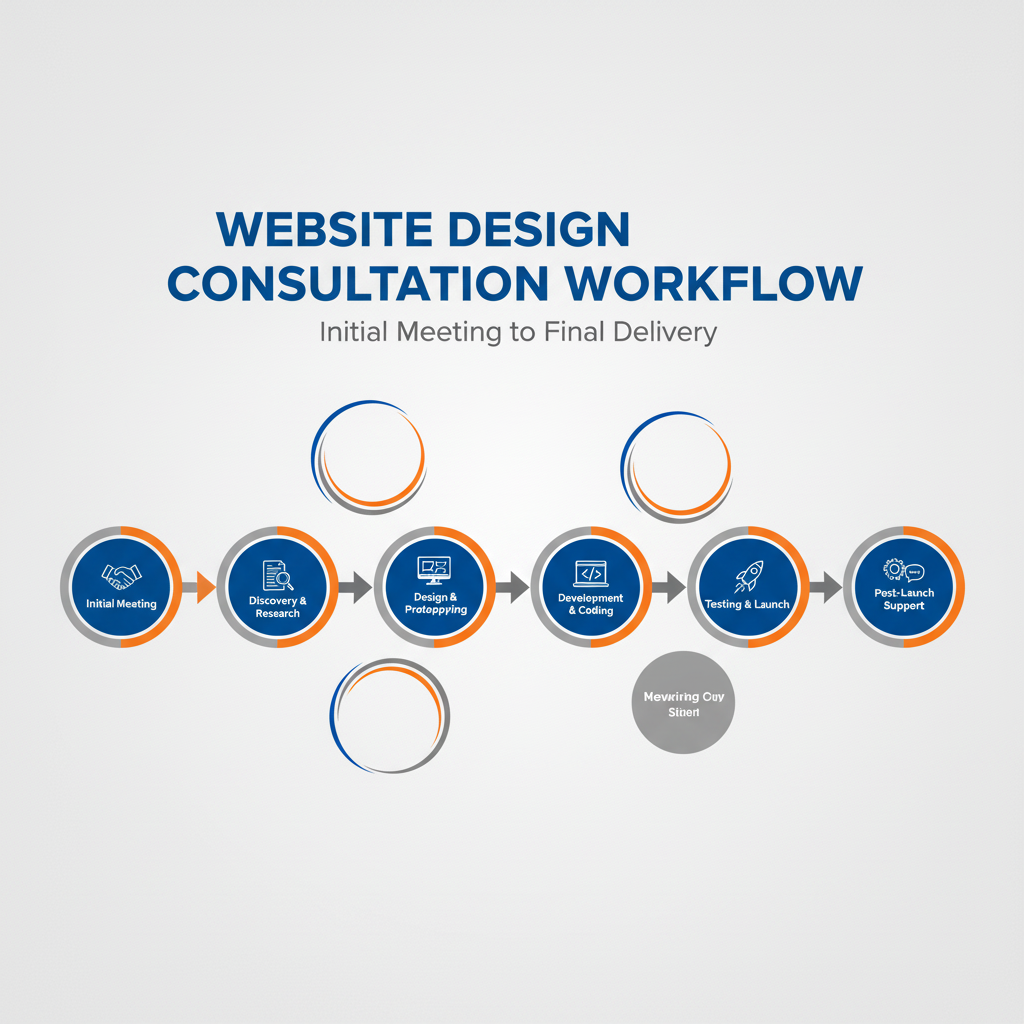
Initial Consultation Structure
1. Business Discovery (15-20 minutes)
-
Questions about your business, offerings, and market
-
Understanding of your target audience
-
Current business challenges
-
Goals for the website
2. Project Scope Discussion (15-20 minutes)
-
Website features and functionality needed
-
Timeline and budget expectations
-
Previous website experience
-
Concerns or specific requirements
3. Approach Explanation (10-15 minutes)
-
Their design and development process
-
Timeline expectations
-
Communication and project management approach
-
Support and maintenance options
4. Portfolio Review (10-15 minutes)
-
Showing relevant past work
-
Explaining their design approach
-
Answering questions about capabilities
5. Pricing and Next Steps (10 minutes)
-
Budget alignment discussion
-
Proposal timeline
-
Next steps and follow-up
After the Consultation
Expect a formal proposal within a few days outlining:
-
Project scope and deliverables
-
Timeline with milestones
-
Pricing and payment terms
-
Contract terms and conditions
-
Start date and process for moving forward
Why Choose Professional Web Design vs. DIY Solutions
While DIY website builders are appealing due to low cost, professional web design offers significant advantages for business-critical websites.
Professional Design Advantages:
-
Custom design reflecting your brand identity
-
Professional appearance building credibility
-
Conversion optimization for better results
-
SEO implementation for search visibility
-
Technical expertise and best practices
-
Ongoing support and optimization
-
Scalability and flexibility
-
Accountability and warranty
DIY Builder Advantages:
-
Lower upfront cost
-
Faster launch capability
-
Direct control over updates
-
Flexibility to make immediate changes
For businesses where their website is a primary revenue source or lead generation channel, professional design delivers ROI that DIY builders rarely match. Vylino’s professional web design services combine strategy, creativity, and technical expertise to deliver websites that exceed expectations.
Vylino: Your Website Design Partner
If you’re in the market for a website design company, consider Vylino. We specialize in helping businesses like yours create websites that attract customers and generate results.
Our approach includes:
Strategic Planning – We begin by deeply understanding your business, goals, and audience.
Professional Design – Our designers create custom designs reflecting your brand while optimizing for conversions.
Technical Excellence – We implement SEO, performance optimization, and responsive design from the ground up.
User Focus – We design experiences that guide visitors toward your desired actions.
Support and Growth – We provide ongoing support, optimization, and growth strategies.
Whether you need a new website, redesign of existing site, or specific functionality, our website development services can help. We’ve helped numerous businesses launch websites that exceed expectations.
Ready to discuss your website project? Schedule a consultation today to explore how we can help your business succeed online.