
Updated October 2026. A high-quality backlink is not simply a link from a website with a high third-party authority score. The strongest backlinks are usually editorially placed, topically relevant, contextually useful and earned from pages that have a genuine reason to reference your content.
That distinction matters. Google’s spam policies explicitly warn against links created mainly to manipulate rankings, including paid links that pass ranking credit, excessive link exchanges, automated link creation and low-quality directory links. A sustainable backlink strategy therefore starts with usefulness and relevance—not volume.
This guide explains what makes a backlink valuable, how to evaluate backlink quality, which white-hat link building methods are worth using, which metrics can mislead you, and how to build authority without turning link acquisition into a numbers game.
What Makes a Backlink High Quality?
There is no single “quality score” used by Google that SEOs can see. In practice, evaluate a backlink across several dimensions instead of relying on one metric.
| Quality factor | What to look for | Why it matters |
|---|---|---|
| Topical relevance | The linking page, section or publication is closely related to your subject, industry or audience. | The reference makes sense to readers and is more likely to be contextually meaningful. |
| Editorial placement | An editor or author chose to cite your page because it supports the content. | Editorial references are harder to manufacture at scale and usually reflect genuine usefulness. |
| Page quality | The linking page is useful, original, indexable and not overloaded with unrelated outbound links. | A strong page provides better context and can send qualified referral traffic. |
| Website trust | The site has real content, identifiable ownership or editorial standards, and a coherent topic. | It reduces the risk of acquiring links from link farms, PBN-style networks or disposable sites. |
| Natural anchor text | The anchor describes the destination naturally rather than forcing an exact-match keyword. | It improves usability and avoids patterns that can look manipulative. |
| Referral potential | The placement could realistically send interested readers, not just “SEO value.” | A link that can generate qualified visits has business value even beyond rankings. |

Domain Authority Is Not a Google Ranking Metric
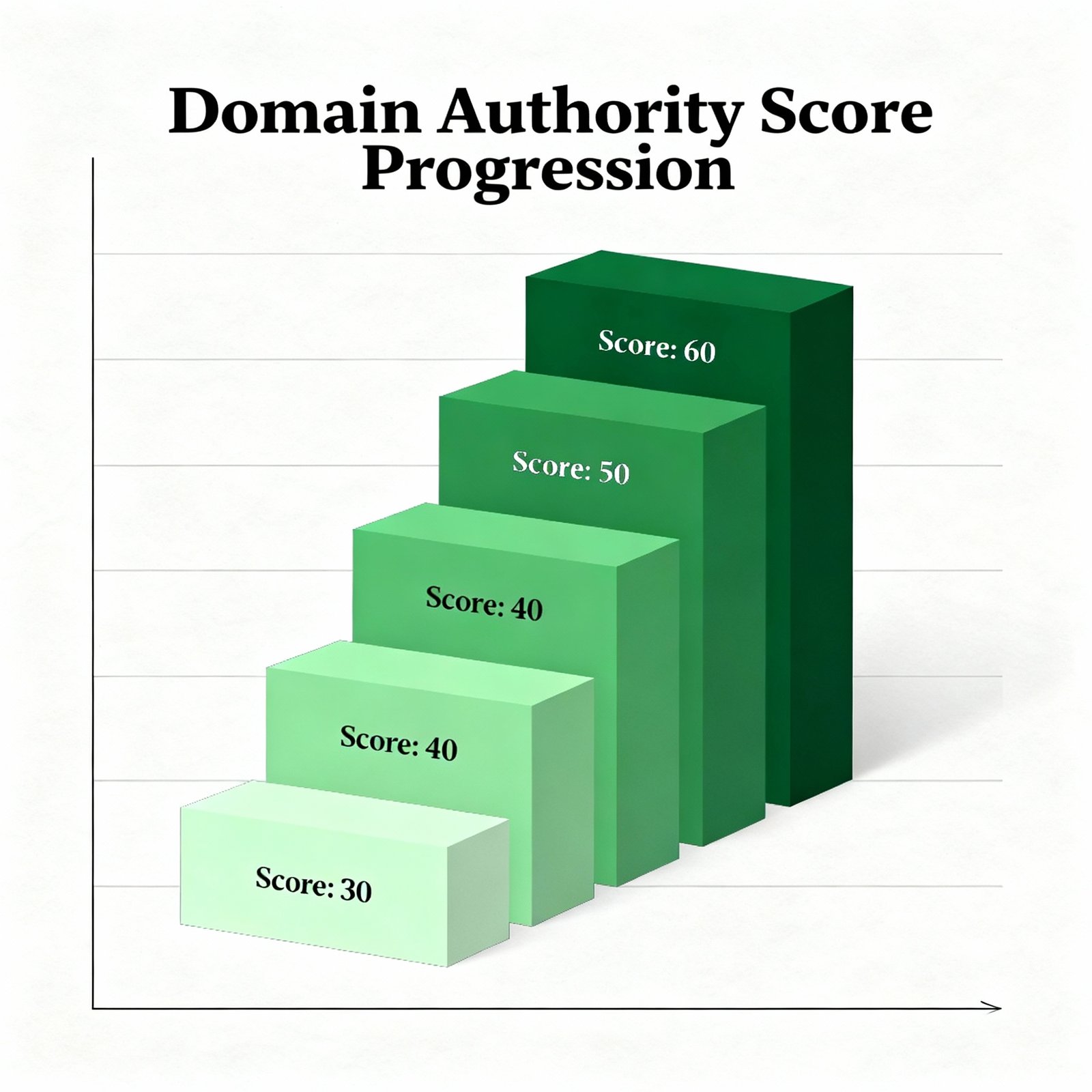
“Domain Authority,” “Domain Rating,” “Authority Score” and similar numbers are third-party SEO metrics created by different tool providers. They can be useful for comparison and prospecting, but they are not Google metrics and should not be treated as proof that a backlink is valuable.
A site can show an impressive authority score while having weak topical relevance, declining organic visibility or a business model built largely around selling links. Conversely, a smaller industry publication can provide a far more useful backlink because the audience, topic and editorial context are highly relevant.
Use authority metrics as one filter—not as the decision.
A Practical Backlink Quality Checklist
Before pursuing or accepting a backlink opportunity, review the actual site and page rather than only looking at a spreadsheet score.
- Is the website genuinely relevant? A strong relationship to your topic usually matters more than a superficial metric.
- Would the link make sense if search engines did not exist? This is a useful test for editorial value.
- Does the site publish useful original content? Avoid sites dominated by thin sponsored posts across unrelated niches.
- Is the page indexed and discoverable? A hidden or orphaned placement has limited practical value.
- Does the page receive or have the potential to receive real visitors? Traffic is not mandatory, but it is a valuable quality signal.
- Is the anchor text natural? Branded, descriptive and partial-match anchors often look more natural than repeated exact-match keywords.
- Are outbound links editorially controlled? Pages linking indiscriminately to casinos, loans, software, health, crypto and every other niche deserve extra scrutiny.
- Is the placement permanent enough to justify the effort? Avoid arrangements where links disappear when a recurring payment stops unless that is clearly an advertising decision.
White-Hat Link Building: What It Actually Means
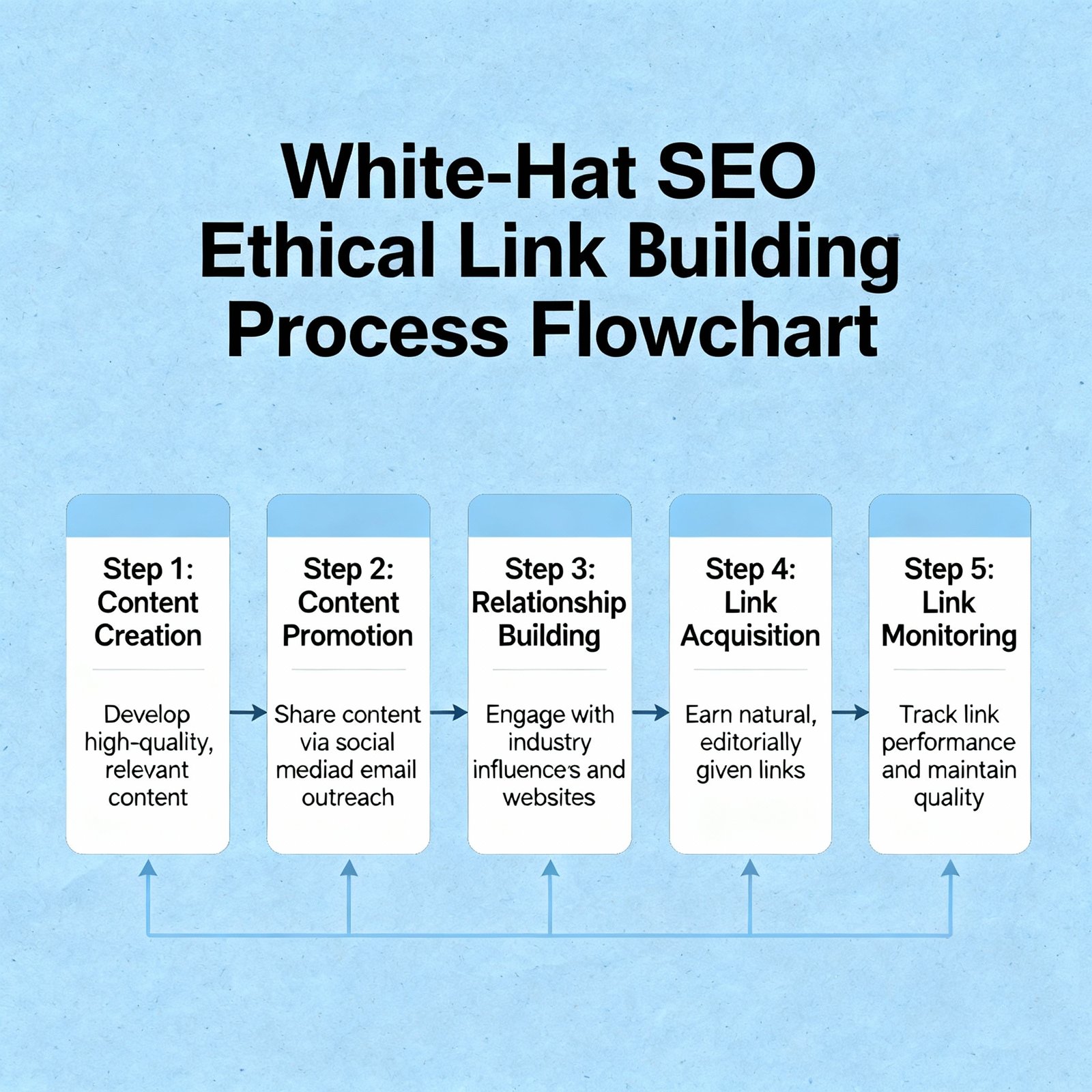
White-hat link building is best understood as earning or attracting references through useful content, legitimate outreach and real relationships rather than creating links primarily to manipulate rankings.
Google’s current spam policies identify practices such as automated link creation, excessive reciprocal linking and paid links that pass ranking credit as examples of link spam. Paid advertising and sponsorship are not automatically prohibited, but Google says those links should be appropriately qualified, such as with rel="sponsored" or rel="nofollow".
For the policy itself, see Google Search spam policies.
High-Quality Backlink Strategies That Still Make Sense
1. Create Link-Worthy Assets
People need a reason to cite you. Original research, calculators, templates, statistics pages, comparison frameworks, detailed tutorials and genuinely useful industry resources are easier to reference than generic promotional content.
A good linkable asset solves a specific problem better than the pages already ranking for that topic.
2. Digital PR and Original Data
Journalists, bloggers and industry publishers often need credible data, expert commentary and timely insights. Original surveys, internal datasets, trend reports and expert analysis can create editorial opportunities that ordinary guest-post outreach cannot.
3. Resource and Reference Outreach
If your page is genuinely useful to a resource page, guide or article, contact the publisher with a specific explanation of where your resource adds value. Avoid mass templates asking for a link simply because you published a new post.
4. Unlinked Brand Mention Reclamation
When another website already mentions your company, product, research or founder without linking, a polite request to turn the existing mention into a citation can be one of the most natural link opportunities.
5. Broken-Link Replacement
If a relevant page links to a dead resource and you have a legitimate replacement, alert the publisher and suggest the live resource. This works only when the replacement genuinely serves the same reader need.
6. Expert Contributions and Partnerships
Interviews, expert quotes, association resources, supplier or partner pages and industry collaborations can generate valuable citations when the relationship is real and the link is relevant to the content.
How to Evaluate a Backlink Prospect Beyond DA or DR
SEO platforms can help with prospecting, but manual review should decide whether a site is worth pursuing. Ahrefs, for example, highlights concepts such as the authority of the linking page and the number of outgoing links when discussing backlink quality. The important point is that quality is multidimensional; no single number tells the whole story.
See Ahrefs’ overview of high-quality backlink factors.
| Check | Useful signal | Warning sign |
|---|---|---|
| Topic | Consistent niche or audience alignment | Random unrelated topics designed for link sales |
| Content | Original articles with identifiable expertise | Thin, templated or AI-spam-style publishing at scale |
| Traffic | Visible search/referral audience and stable content | High authority metric but almost no discoverable pages |
| Outbound links | Selective citations that fit the article | Every post contains commercial exact-match links |
| Placement | Contextual mention inside relevant copy | Sitewide footer, widget or unrelated author bio |
Dofollow, Nofollow, Sponsored and UGC Links
Not every useful backlink needs to pass ranking signals in the same way. A healthy web presence can naturally include different link attributes.
- Standard links are ordinary editorial links without a special qualification.
- rel=”nofollow” can be used when a publisher does not want to imply endorsement or pass ranking credit.
- rel=”sponsored” is intended for advertising, sponsorships and compensated placements.
- rel=”ugc” can identify links placed within user-generated content such as forums or comments.
A nofollow or sponsored link can still send referral traffic, create brand discovery and support broader visibility. Do not reject a legitimate editorial opportunity only because it is not a standard follow link.
Backlink Tactics to Avoid
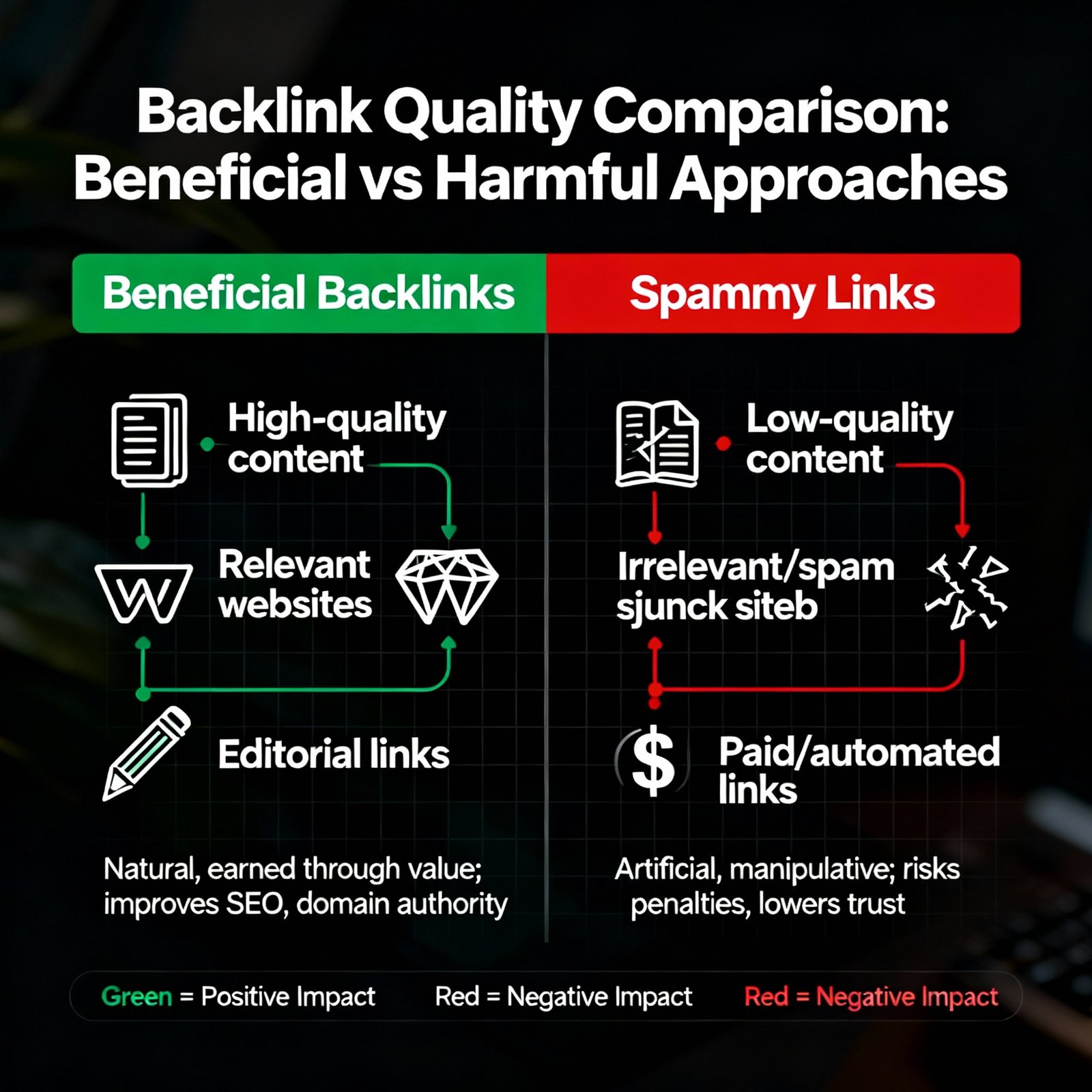
Risk usually increases when links are easy to manufacture at scale and exist mainly for rankings rather than users.
- Bulk automated backlink packages.
- Private blog networks created mainly to sell or place links.
- Excessive reciprocal linking arrangements.
- Paid guest posts that pass ranking credit without proper qualification.
- Low-quality directories with no real audience or editorial purpose.
- Keyword-stuffed forum comments, profiles or widgets.
- Repeated exact-match anchor text across many placements.
A sudden appearance of poor links does not automatically mean a site will be penalized, and not every low-quality backlink needs intervention. The larger concern is deliberately participating in manipulative link schemes.
How High-Quality Backlinks Support SEO
Backlinks can help search engines discover pages and understand how content is connected across the web. Strong editorial citations can also reinforce the reputation of useful content and send qualified visitors directly from the referring site.
However, backlinks do not operate in isolation. A weak page does not become excellent simply because links point to it. Technical accessibility, search intent, content quality, internal linking, user experience and brand credibility still matter.
If the underlying site needs work, start with a website audit or review Vylino’s SEO services before investing heavily in outreach.
How Many Backlinks Do You Need?
There is no universal number. A local service page in a low-competition market may need very few external links, while a national commercial query may compete against pages with years of editorial mentions and strong brand authority.
Instead of setting a target such as “50 links per month,” compare the pages currently ranking for your target queries. Review their referring domains, topical authority, content depth and brand strength. Then decide what type of link opportunities would actually narrow the gap.
For the next article in this series, see Strategic Link Acquisition: Quality Over Quantity, which focuses specifically on building a quality-first acquisition plan.
How to Measure Whether Link Building Is Working
A good campaign should be evaluated with multiple indicators rather than a single DA or DR number:
- Growth in relevant referring domains, not just total backlinks.
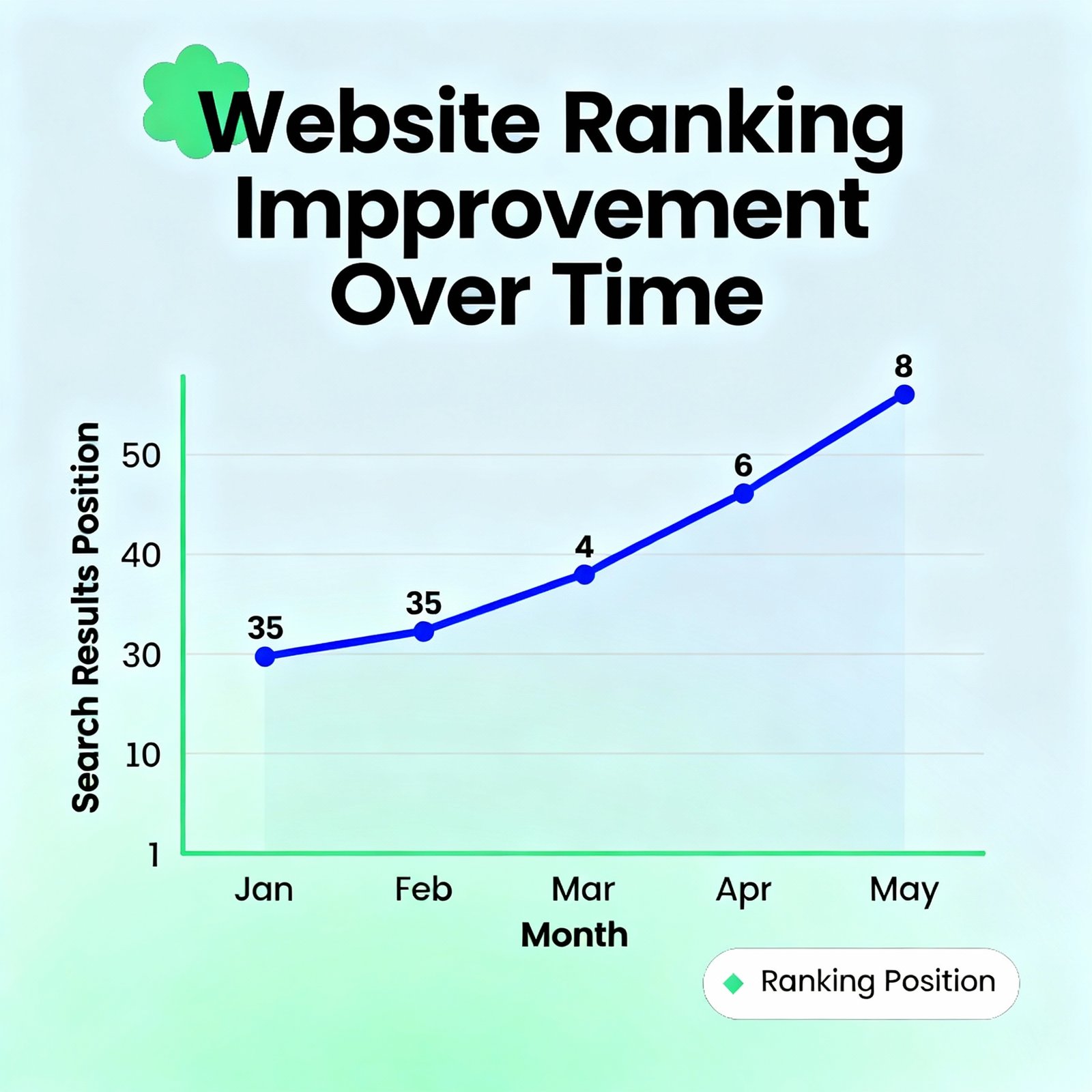
- Improvement in rankings and impressions for the specific pages being promoted.
- Referral visits and assisted conversions from useful placements.
- Brand mentions and citations from credible industry sources.
- Whether link acquisition is becoming easier as your content and brand gain recognition.
Do not promise or expect a fixed ranking timeline from backlinks alone. Search performance depends on competition, crawl/indexing, content, technical health, existing authority and many other factors.
Choosing a Backlink Building Provider
If you outsource link acquisition, ask for the process before asking for the number of links.
- How are prospects found and manually reviewed?
- Can you reject irrelevant sites before placement?
- Are paid or sponsored relationships disclosed and qualified correctly?
- Will you see the destination page and proposed anchor before outreach?
- Does reporting include live URLs, target pages, anchors and placement context?
- Is success measured beyond DA/DR?
- Does the provider avoid PBNs, bulk automation and guaranteed ranking claims?
For businesses that want Vylino to handle prospect research, outreach and reporting, see our backlink building services.
Frequently Asked Questions
What is a high-quality backlink?
A high-quality backlink is typically an editorially placed link from a relevant, trustworthy page where the reference genuinely helps the reader. Relevance, context, page quality and editorial intent matter more than one third-party authority score.
Are high-DA backlinks always good?
No. DA is a third-party metric, not a Google metric. A high-DA site can still be irrelevant, spammy or built around selling links. Review the actual website, page, topic, traffic and placement.
Are nofollow backlinks useless?
No. They may still generate referral traffic, brand exposure and legitimate citations. Google also treats link attributes as signals in its systems. The practical value of a link is broader than whether it is a standard follow link.
Should I buy backlinks?
If payment is for advertising or sponsorship, Google says the link should be appropriately qualified, such as with rel="sponsored" or rel="nofollow". Paying for links specifically to pass ranking credit can violate Google’s spam policies.
Is backlink quantity important?
Quantity can matter only after quality and relevance are considered. A large number of weak links is not automatically better than a smaller set of strong editorial references. Competitive analysis should focus on relevant referring domains and the strength of the pages that actually rank.
Final Takeaway
High-quality backlink building is not about collecting the biggest number of links or chasing the highest DA score. It is about earning references that make sense to real readers, come from relevant and trustworthy sources, and support pages that deserve to rank.
Build useful assets, earn editorial citations, avoid manipulative schemes, measure business outcomes and treat backlink acquisition as one part of a broader SEO strategy. That approach is slower than bulk link packages—but it is far more defensible and useful over time.